Song Meaning
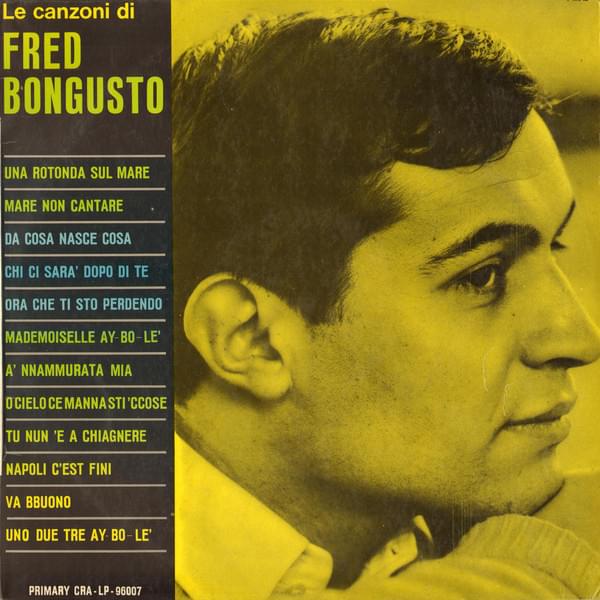
These lyrics offer a tender, urgent plea for resilience in the face of a painful farewell. The speaker directly commands, "Tu nun 'e a chiagnere" (You shouldn't cry), urging the listener to "Asciuga 'e lacrime" (Dry the tears). It's a powerful opening, setting a tone of immediate solace.
The central tension arises from the acknowledgment of sorrow against the insistence on hope. The speaker understands the pain, noting, "O saccio che è triste / 'A vacanza è fernuta" (I know it's sad / The vacation is over), and that "Nu treno te porta luntano" (A train takes you far away). Yet, this sadness is immediately countered by the declaration, "È bello vivere" (It's beautiful to live), pushing back against the melancholy.
A particularly striking craft element is the shift from earthly sorrow to celestial reassurance. The lyrics encourage the listener to "Apri l'uocchie e guarda 'ncielo" (Open your eyes and look at the sky), revealing that "So fujute tutte 'e nuvole" (All the clouds have fled). This imagery culminates in the powerful metaphor of a love "vuluto d'a luna" (wanted by the moon) that "nun po' muri' / Co' sole d'a matina" (cannot die / With the morning sun), explicitly stating, "'O sole è a vita" (The sun is life).
What makes these lyrics so effective is their blend of empathetic understanding and firm, almost insistent, optimism. The repeated refrain of "Nun 'e a chiagnere" transforms from a simple command into a comforting mantra, reinforced by the enduring power of nature. The lyrics suggest that even as physical distance separates, the love itself, like the sun, remains a vital, life-giving force, offering a profound sense of continuity and hope.
 View Artist