Song Meaning
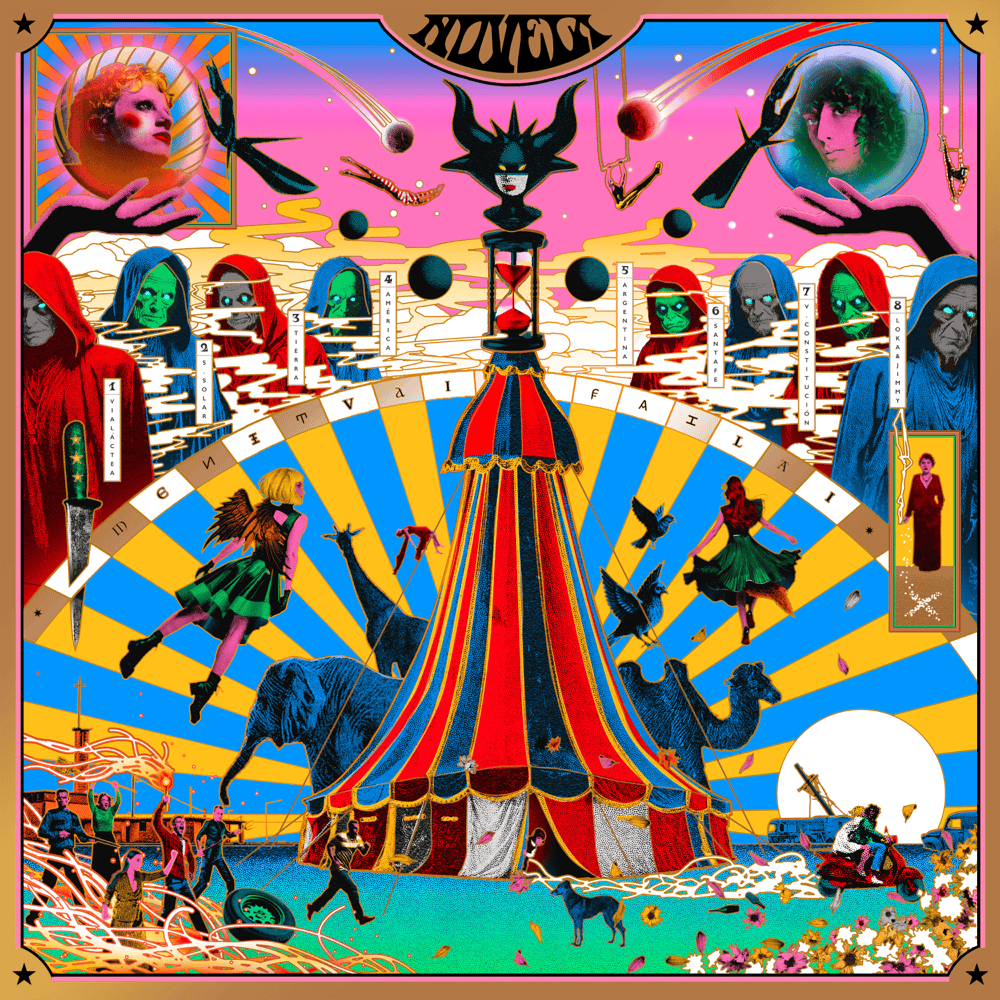
{"song_id": 13742282, "meaning": "Fito Páez's \"Argentina Es Una Trampa\" (Argentina Is A Trap) unfolds like a fever dream of exploitation, fleeting romance, and existential disillusionment, all set against the backdrop of a nation perceived as inherently ensnaring. The song's narrative, populated by circus figures – Jok, Loka, Yasmin, Pollock – hints at a deeper commentary on the commodification of human experience. Jok's initial scheme to film the circus for profit immediately establishes a sense of opportunism, while Loka's confinement suggests the suppression of authentic selfhood for the sake of spectacle. The phrase \"Argentina es una trampa\" acts as a recurring lament, implying that the nation itself perpetuates this cycle of entrapment, a place where dreams and desires are inevitably corrupted. This can be interpreted as a reflection on Argentina's tumultuous history and its ongoing struggles with political and economic instability.
The chaotic scene involving Yasmin, Pollock, and the unnamed suitor, fueled by rock music and alcohol, embodies the volatile undercurrents of Argentine society. The sudden eruption of violence highlights a sense of frustration and unresolved tensions, perhaps reflecting the country's deep-seated social and political divisions. The line \"Todos se agarraron a las piñas\" (everyone started punching each other) is not just a literal description of a bar fight; it's a metaphor for the broader societal conflict simmering beneath the surface. The circus, therefore, becomes a microcosm of Argentina, a stage where personal dramas play out against a backdrop of national malaise.
Jimmy's emotional breakdown when Loka fails to attend his performance – \"Love is falling over my heart\" – underscores the fragility of human connection in this environment. His subsequent act of smashing his guitar and joining the brawl signifies a complete surrender to the chaos. The song's later verses, with lines like \"Vive rápido, muere joven y deja un bonito cadáver\" (Live fast, die young, and leave a beautiful corpse) and \"La gente ya no cree en nada\" (People don't believe in anything anymore), paint a bleak picture of a society grappling with nihilism and a loss of faith. The juxtaposition of \"Católicos contra jews / Jews contra musulmanes\" further highlights the divisive forces at play. Ultimately, \"Argentina Es Una Trampa\" is a darkly poetic reflection on a nation grappling with its identity, trapped in a cycle of exploitation and disillusionment, where even love and art are ultimately consumed by the prevailing chaos."}
 View Artist