Song Meaning
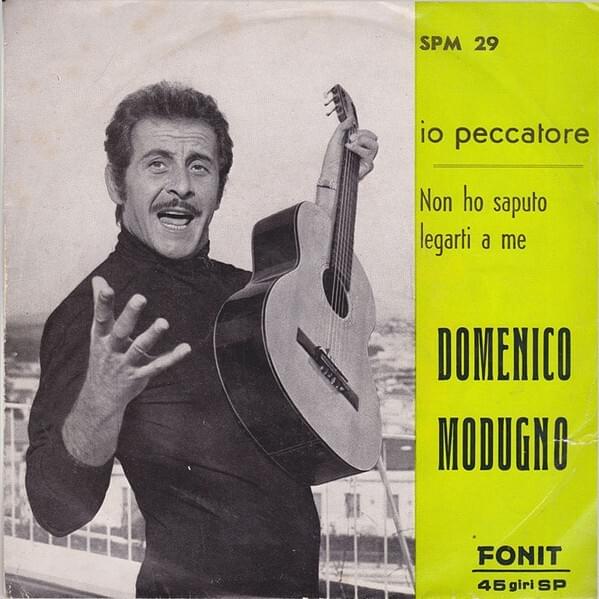
{"song_id": 14760520, "meaning": "Domenico Modugno's \"Non ho saputo legarti a me\" is a raw, almost brutal, study in regret and the paralysis of unspoken feelings. It's not just a lament about lost love; it's a self-indictment. The speaker acknowledges his failure to secure the relationship, confessing, \"Non ho saputo legarti a me\" – \"I couldn't tie you to me.\" This isn't presented as a twist of fate, but as a direct consequence of his own inaction or inability. The opening lines, \"Ti penso e ti ritrovo / In fondo ad ogni cosa\" immediately establish the omnipresent nature of his longing. She is not just a memory, but an intrinsic part of his present experience, coloring everything he encounters.
The bridge provides a crucial insight into the dynamic: \"Forse non dissi mai, mai, mai / Le cose che tu aspettavi.\" He recognizes his failure to articulate the emotions that would have sustained the bond. However, he immediately deflects some responsibility, adding, \"La colpa del dolore che t'è rimasto / Non devi darla a me.\" This hints at a complex interplay of expectations and communication failures. Was he truly incapable of expressing himself, or was there an element of stubborn pride or fear that prevented him from fully committing? The nuance of this moment is that it acknowledges fault but also attempts to redistribute it, revealing a deep-seated conflict.
The second verse brings a sense of tragic irony. She is now bound to something that doesn't matter to her, while they both share the pain of what could have been. The repetition of \"Non ho saputo legarti a me\" at the song's close underscores the permanence of his regret. It's not just about losing her to another person, but about the profound awareness that he was the architect of his own loss. Modugno's delivery, imbued with a world-weary resignation, elevates the song beyond a simple breakup ballad into a poignant meditation on missed opportunities and the enduring weight of unspoken truths. The song meaning resides not just in the lyrics, but in the space between them, in the unspoken anxieties and the self-inflicted wounds of a love unrealized."}
 View Artist