Song Meaning
The narrator has seen the world, traversing oceans and visiting global cities from Spain to Hawaii, Brazil to Algeria. Yet, despite this extensive travel, the lyrics reveal a profound sense of homecoming. The repeated assertion, "Pa onda nazad u Split" (Then back to Split), immediately grounds the expansive journey in a singular, cherished location. This sets up a core tension: the allure of distant lands versus the deep-seated pull of one's origin.
The central conflict emerges as the narrator questions the value of famous global destinations like Copacabana, Acapulco, or even Paris. The rhetorical question, "Ča će mi...?" (What do I need...?), dismisses these iconic places. This dismissal isn't born of ignorance but of a powerful counter-attraction. The lyrics state, "Kad ja iman svoju kalu / Kad ja iman svoju malu / Tamo je moj cili svit" (When I have my cove / When I have my little one / There is my whole world). This highlights a profound contentment found not in exotic locales, but in a specific, intimate place and perhaps a specific person, which collectively represent the narrator's entire universe.
The most striking aspect of the craft is the direct contrast between the vastness of the world experienced and the intense focus on a personal, localized paradise. The list of far-flung places – "Honolulu il' Pariz" – serves to amplify the value of the narrator's "kalu" and "malu." The final stanza reinforces this by explicitly stating that the cherished places are not the foreign lands previously mentioned, but rather the "voljeni grad" (beloved city) that appears when "nošen valima i vjetrom" (carried by waves and wind). This imagery suggests a natural, almost fated return, emphasizing that true fulfillment lies in the familiar.
These lyrics resonate because they articulate a universal human experience: the deep connection to home and loved ones that can eclipse any worldly adventure. The writing effectively uses the grand scale of global travel to underscore the intimate scale of personal belonging. The narrator's journey, rather than leading to wanderlust, ultimately confirms that their 'whole world' is found in their own 'cove' and with their 'little one,' a sentiment that feels both deeply personal and widely understood.
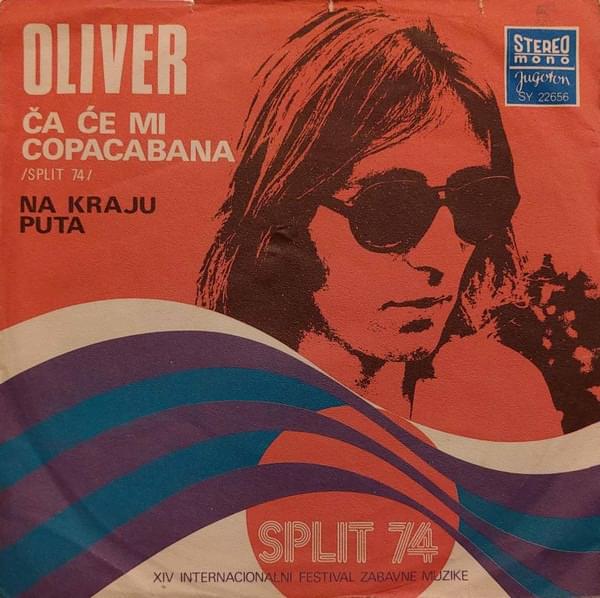
 View Artist