Song Meaning
{"song_id": 14368606, "meaning": "Daniel Lanois's \"The Maker (Calypso Demo)\" isn't just a song; it's a stark, spiritual reckoning set against a backdrop of deep personal struggle. The opening lines immediately plunge us into a world of \"deep water, black and cold like the night,\" a potent metaphor for the singer's internal state. He confesses to running \"a twisted line,\" suggesting a life lived outside the bounds of conventional morality or perhaps simply a journey marked by missteps and regrets. The repeated phrase \"stranger in the eyes of the maker\" underscores a profound sense of alienation from a higher power, a feeling of being judged and found wanting. This isn't mere angst; it's a primal scream for redemption. The lyrics analysis points toward a yearning for acceptance and forgiveness, themes that resonate deeply within the human psyche.
The song takes a turn toward hope, albeit a fragile one. The singer describes being blinded by \"fog in my eyes\" and paralyzed by fear, but then sees a light in the distance. The appearance of \"Jean Baptiste walking to me with the maker\" introduces a religious element, suggesting a path to salvation through faith and guidance. However, this is not a straightforward conversion narrative. The reference to being \"bent and broken by a long and dangerous sleep\" speaks to a profound weariness, a sense of having been damaged by life's trials. The inability to \"work the Fields of Abraham\" hints at a feeling of unworthiness, a belief that the speaker is somehow incapable of fulfilling his spiritual potential.
The song's latter verses introduce images of societal suffering and divine judgment. \"Homeless daughters standing there with broken wings\" evokes a sense of compassion for the marginalized and vulnerable. The mention of \"flaming swords there over east of Eden\" is a clear allusion to the expulsion from paradise, a symbol of humanity's fallen state and the consequences of sin. The repetition of \"burning in the eyes of the maker\" emphasizes the intensity of divine scrutiny, a sense that the world is being watched and judged. The final line, \"Oh river rise from your sleep,\" could be interpreted as a plea for renewal and transformation, a hope that even in the face of judgment, redemption is still possible. Lanois masterfully blends personal introspection with broader spiritual and social themes, creating a song that is both deeply moving and intellectually stimulating."}
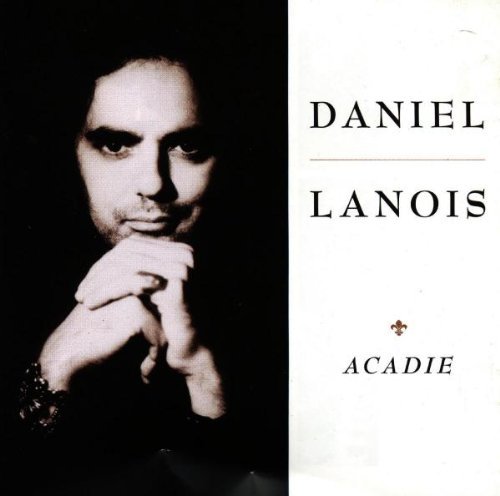
 View Artist