Song Meaning
{"song_id": 14368607, "meaning": "Daniel Lanois’s \"The Maker (Early Bass & Lyrics)\" plunges into a stark landscape of spiritual reckoning, a place where personal failings meet the implacable gaze of a creator. The opening lines paint a picture of immersion in darkness, both literal (\"deep water, black and cold like the night\") and metaphorical, hinting at a past marked by missteps (\"I've run a twisted line\"). The singer casts himself as an outsider, estranged not from society, but from a sense of divine grace. This sense of alienation, of being a \"stranger in the eyes of the maker,\" establishes the central conflict of the song: a yearning for redemption and a struggle to reconcile with a higher power. The \"fog\" and \"fear\" become obstacles to clarity, suggesting a self-imposed blindness that obscures the path toward spiritual understanding. The appearance of \"Jean Baptiste\" walking \"with the maker\" is a powerful symbolic moment.
The lyrics shift to a tone of weariness and regret, acknowledging the toll that life's struggles have taken. The image of a \"body bent and broken\" conveys a sense of vulnerability and the consequences of past actions. The inability to \"work the Fields of Abraham\" speaks to a loss of purpose, a feeling of being unable to fulfill one's potential or contribute to something meaningful. Yet, amidst this despair, there's a subtle shift. The singer declares, \"I'm not a stranger / In the hands of the maker,\" suggesting a flicker of hope, a belief that even in brokenness, one remains within the creator's care.
The final verses introduce images of suffering and judgment. \"Homeless daughters\" with \"broken wings\" evoke a sense of societal pain and vulnerability, while the \"flaming swords\" east of Eden symbolize divine justice and the consequences of transgression. The repetition of \"burning in the eyes of the maker\" emphasizes the intensity of this judgment, but also implies a profound connection. The song’s meaning ultimately resides in the tension between alienation and belonging, judgment and mercy. It's a raw, honest exploration of the human condition, grappling with themes of sin, redemption, and the search for meaning in a world marked by both beauty and suffering. The final plea, \"Oh river rise from your sleep,\" suggests a yearning for renewal, a hope that even from the depths of despair, transformation is possible."}
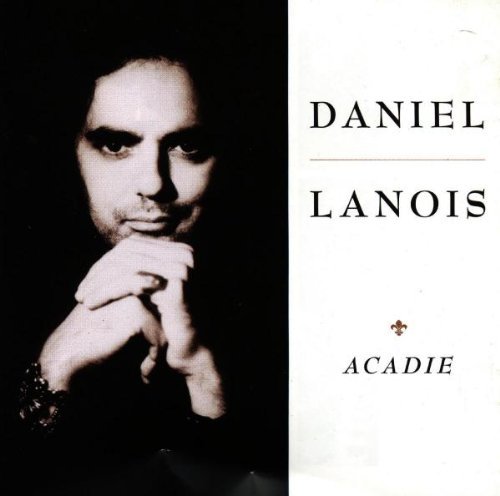
 View Artist