Song Meaning
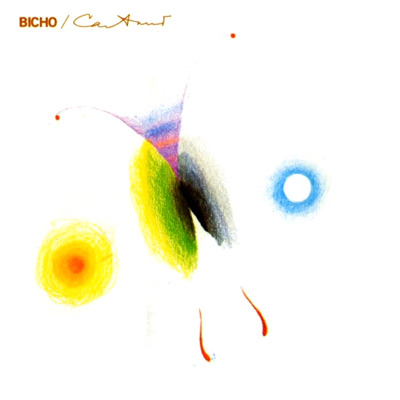
Caetano Veloso's "A Grande Borboleta" flutters into the listener's consciousness not as a simple children's rhyme, but as a concentrated burst of symbolic poetry. The titular 'great butterfly' carries the weight of celestial bodies – the moon on one wing, the sun on the other. This immediately elevates the creature beyond the earthly realm; it's a being of cosmic significance, balancing opposing forces. The 'arrow' ('a seta') poised between these wings suggests direction, purpose, or even the piercing clarity of insight that comes from understanding duality. Veloso isn't just painting a pretty picture; he's invoking a powerful image of equilibrium and intent. The butterfly becomes a vessel for navigating the tensions inherent in existence.
The song's brevity is key to its power. It doesn't belabor its point, instead relying on the resonant symbolism to do the work. The plea for the butterfly to be 'complete' ('seja completa') and for the mind to be 'free' ('mente solta') ties the external imagery to an internal state. The butterfly's wholeness mirrors the desired state of the individual. The implication is clear: only through embracing the full spectrum of experience – light and dark, logic and intuition – can one achieve true mental liberation. This is a deeply personal aspiration projected onto a grand, almost mythological scale.
Ultimately, "A Grande Borboleta" is a meditation on the interconnectedness of the macrocosm and the microcosm. Veloso uses the butterfly as a metaphor for the human psyche, capable of holding vast and contrasting elements within itself. The lyrics analysis reveals a profound yearning for balance and freedom, a call to integrate opposing forces in order to achieve a state of complete and unburdened awareness. The song’s beauty lies in its simplicity, its ability to evoke complex emotions and philosophical ideas with just a few carefully chosen words.
 View Artist