Song Meaning
{"song_id": 15748368, "meaning": "Buddy Guy's \"I Love the Life I Live\" isn't just a blues boast; it's a defiant manifesto of personal freedom. The song reverberates with the raw energy of a man who's made peace with his choices, come what may. It's a declaration of independence from societal judgment, delivered with a swagger that only the blues can truly capture. The repeated assertion, \"I live the life I love and I love the life I live,\" acts as both a shield and a self-affirmation, warding off criticism while simultaneously reinforcing his chosen path. There's a quiet desperation, maybe, in having to say it so often, as if convincing himself as much as anyone else.
The lyrical content hints at a life lived on the edge – a tightrope walk between indulgence and ruin. References to spending \"a thousand on a hap less time\" followed by the possibility of being broke the next day paint a picture of impulsive behavior and a devil-may-care attitude toward consequences. The casual mention of a \"diamond ring and my money too\" suggests a certain level of success, but it's juxtaposed with the awareness that it could all vanish in an instant. This precariousness isn't a source of anxiety for the narrator; instead, it seems to fuel his passionate embrace of the present moment. The line \"Tomorrow night I could be on the hill\" is a stark acknowledgment of potential destitution, but it doesn't inspire regret or a call for change. Instead, it underscores the fleeting nature of life and the importance of living it on one's own terms.
Beneath the surface of blues bravado, \"I Love the Life I Live\" explores the psychological complexities of self-acceptance and the human need for autonomy. The narrator isn't necessarily advocating for a reckless lifestyle; he's simply asserting his right to choose his own path, even if it's fraught with risks. The lines like “Don't talk about me cause I could be high / Just forgive me if you will” is almost an apology, not for his actions, but for the discomfort they might cause others. It's a plea for understanding, or at least tolerance, from a world that often demands conformity. The song becomes an anthem for anyone who's ever felt like an outsider, a reminder that true happiness lies in embracing one's authentic self, regardless of external pressures."}
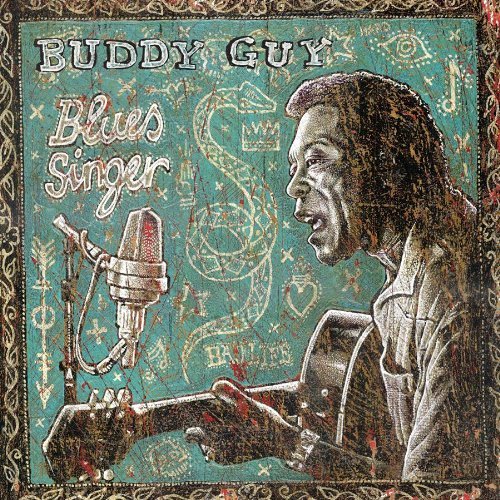
 View Artist