Song Meaning
{"song_id": 15748188, "meaning": "Buddy Guy's rendition of \"Mary Had a Little Lamb\" isn't some saccharine nursery rhyme; it's a bluesman's sly wink at innocence lost and the electric undercurrents of desire. The familiar melody is a Trojan horse, carrying within it the raw, untamed energy that defines Guy's signature sound. While superficially adhering to the children's verse, the performance injects a palpable sense of adult yearning. The lamb, traditionally a symbol of purity and docile companionship, becomes something more complex in Guy's hands – a representation of unwavering devotion, perhaps, but also a hint of something possessive and potentially disruptive, as evidenced by the line about breaking the teacher's rule. It's no longer about a simple childhood friendship.
The lyrical fragment \"For bringin' yellow bearskin / I wrote a letter to my baby / On my way I've asked\" throws the entire song into a different light. It's a non-sequitur, a bluesy detour that hints at romantic longing and perhaps infidelity (\"yellow bearskin\" as a euphemism?). This break from the narrative suggests a world beyond the schoolyard, a world of adult relationships and complex emotions that are only hinted at in the original rhyme. The lamb's unwavering loyalty mirrors the singer's own desire for connection, tinged with a hint of desperation.
Ultimately, Buddy Guy doesn't just sing \"Mary Had a Little Lamb\"; he reimagines it as a blues lament. The simplicity of the original lyrics clashes brilliantly with the complexity of the music, creating a tension that is both unsettling and deeply compelling. It's a masterful deconstruction of innocence, revealing the primal emotions that lie beneath the surface of even the most seemingly innocent of stories. The \"Na na na na\" sections, rather than being childish singalongs, become almost hypnotic refrains, underscoring the cyclical nature of desire and the enduring power of the blues to transform the familiar into something raw and real."}
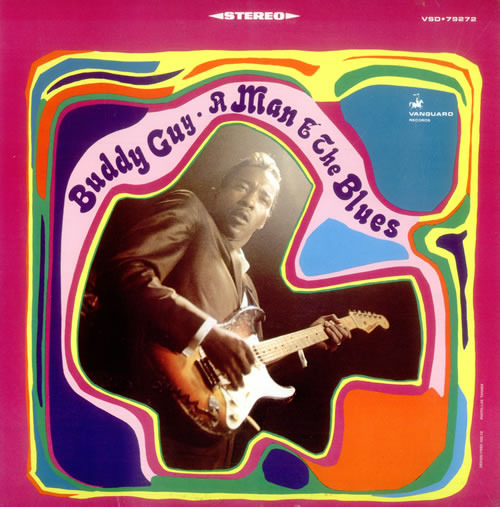
 View Artist