Song Meaning
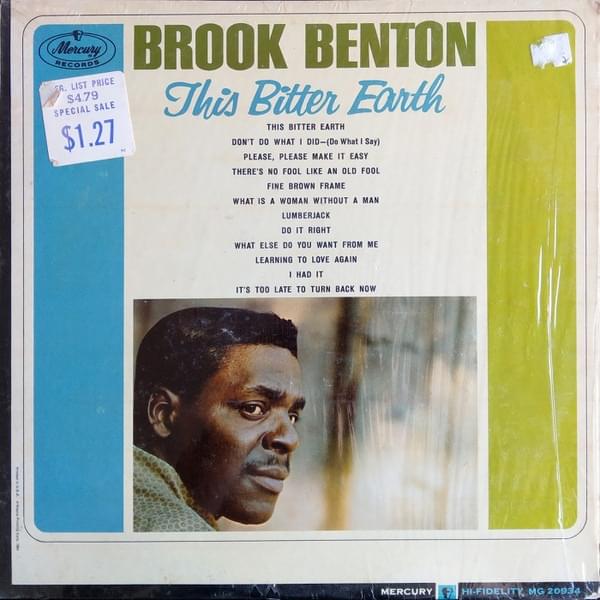
Brook Benton's "It's Too Late To Turn Back Now" isn't just a lament; it's a masterclass in the psychology of sunk cost fallacy applied to matters of the heart. The song circles the agonizing realization that despite the pain inflicted ("You don't know how much you hurt me"), the emotional investment is too profound to simply walk away. It's the paradox of staying in a relationship that logically should end, driven by the weight of shared history and the desperate hope that things might revert to the imagined "heaven" once glimpsed. The repeated refrain, "It's too late to turn back now," becomes less a statement of fact and more a mantra of self-deception.
The lyrics betray a deep internal conflict. Benton's narrator outwardly blesses his departing lover ("Go-o on, be happy, bless you child"), yet his "secret heart" screams the opposite. This duality highlights the cognitive dissonance inherent in clinging to a lost love. He questions his own judgment ("Was I a fool from the start, building castles in the skies?"), acknowledging the potential for self-delusion. This isn't just about romantic love; it's about the human tendency to idealize the past and to stubbornly hold onto fantasies, even when confronted with harsh reality.
Ultimately, "It's Too Late To Turn Back Now" resonates because it captures a universal, if uncomfortable, truth: that love can sometimes trap us in situations we know are detrimental. It's a raw exploration of vulnerability, pride, and the irrationality that often governs our most intimate connections. The song's power lies not in its resolution, but in its unflinching portrayal of emotional inertia, leaving the listener to ponder the complex interplay of hope, regret, and the agonizing weight of what might have been.
 View Artist