Song Meaning
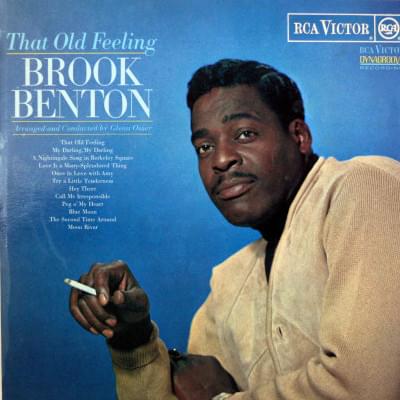
Brook Benton's rendition of "Blue Moon" isn't just a sentimental standard; it's a study in transformation, a before-and-after portrait painted with celestial hues. The lyrics sketch a man existing in a state of emotional neutrality, a life devoid of purpose beyond basic existence. Before love, his heart is merely "an organ," a biological pump, not the vibrant center of feeling it becomes. The admission that waking up was once a hateful experience further underscores this prior state of drabness, a life lived in shades of gray. Then, the arrival of love flips the script entirely.
The titular "Blue Moon" serves as both witness and catalyst. It's not just a passive observer; the singer directly addresses the moon, crediting it with awareness of his solitude and unfulfilled desires. The moon *knew* what he was there for, heard his prayer. This imbues the celestial body with a sense of empathetic agency. The most striking image is the moon turning to gold, a powerful metaphor for the alchemical transformation love enacts. It's a moment of epiphany, where the mundane is transmuted into something precious and rare. The gold moon signifies not literal wealth (though he mentions wanting to be "as rich as Morgan"), but the incalculable value of genuine connection.
Ultimately, the song's meaning rests on the profound shift from isolation to belonging. The repetition of "Without a dream in my heart/Without a love of my own" in the "Blue Moon" refrain emphasizes the initial void. The subsequent declaration that he's "no longer alone" marks a complete reversal. Benton's delivery, imbued with his signature velvety smoothness, amplifies the feeling of contentment and gratitude. "Blue Moon", in Benton's hands, becomes less about the moon itself and more about the inner landscape it illuminates, revealing the power of love to reshape our perceptions and redefine our very existence.
 View Artist