Song Meaning
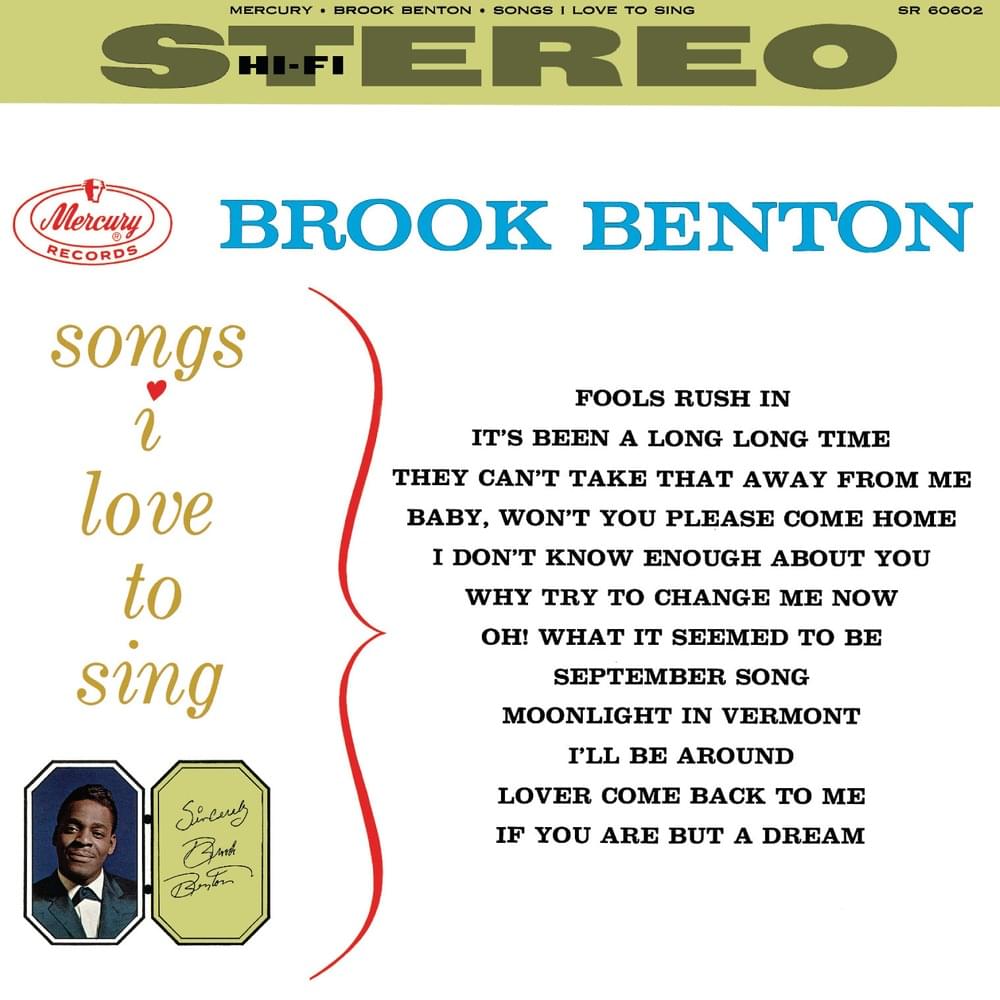
Brook Benton's rendition of "Baby Won't You Please Come Home" is a masterclass in distilled yearning, a raw and plaintive cry echoing from the depths of abandonment. Stripped bare of artifice, the lyrics function as a direct, almost primal plea. The opening lines, "Baby, won't you please come home / 'Cause your daddy's all alone," immediately establish a dynamic of paternal vulnerability, a subversion of traditional power roles that adds an unsettling layer to the song's emotional core. The narrator isn't just lonely; he's existentially adrift, his identity seemingly dependent on the presence of the absent 'baby.' The repetition of "Baby, come home" throughout the song underscores the obsessive nature of this longing, suggesting a mind caught in a loop of regret and desperate hope. It’s less a request and more an involuntary reflex, a verbal tic born of heartbreak.
The simplicity of the lyrics belies a profound psychological complexity. The phrase "When you left you broke my heart / Because I never thought we'd part" speaks to a fundamental miscalculation in the relationship, a naive belief in its permanence that has been shattered by the departure. This isn't just about romantic love; it's about the loss of a foundational connection, something so integral to the narrator's sense of self that its absence leaves him utterly disoriented. The use of "baby" is also interesting because it is ambiguous. It could be a child but it could also be a romantic partner. That ambiguity makes the song more broadly applicable to the human condition. The feeling of loss can be hard to describe because it's so all encompassing, and this song captures that feeling well.
Ultimately, "Baby Won't You Please Come Home," as interpreted by Brook Benton, transcends its straightforward lyrical structure to become a haunting meditation on loss, dependency, and the fragile nature of human connection. It's a song that resonates not through clever wordplay or elaborate metaphor, but through its unflinching portrayal of vulnerability and its raw, unadorned emotional honesty. The cyclical nature of the lyrics, forever returning to the same desperate plea, mirrors the cyclical nature of grief itself, a reminder that some wounds may never fully heal, and that the echo of absence can reverberate indefinitely.
 View Artist