Song Meaning
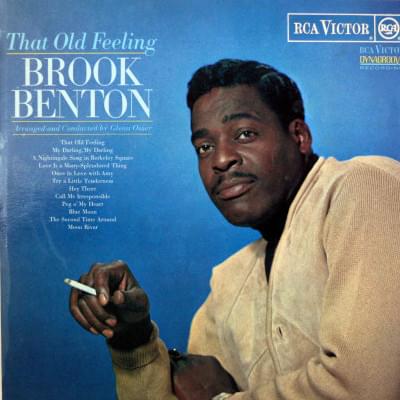
Brook Benton's rendition of "A Nightingale Sang In Berkeley Square" isn't just a love song; it's an exercise in romantic idealization, bordering on delusion. The lyrics paint a picture of a London evening so drenched in enchantment that it transcends reality. Angels dining at the Ritz? Streets paved with stars? These aren't literal observations, but rather the hyperbolic expressions of a narrator utterly consumed by infatuation. The nightingale itself becomes a symbol – an auditory hallucination perhaps – representing the overwhelming sensory experience of falling in love. The song's power lies in its commitment to this heightened emotional state, inviting the listener to suspend disbelief and revel in the intoxicating fantasy. It's romance as fever dream.
But there's a subtle undercurrent of insecurity woven into this idealized narrative. The lines "I may be right, I may be wrong / But I'm perfectly willing to swear" hint at a need for validation, as if the narrator is trying to convince himself (and us) that this magical encounter was real. The "poor puzzled moon" wearing a frown suggests a world thrown off balance by the sheer force of their connection. Is this genuine love, or a desperate attempt to rewrite reality to fit a romantic ideal? The beauty of the song is that it allows for both interpretations.
Ultimately, "A Nightingale Sang In Berkeley Square," as interpreted by Benton, becomes a poignant exploration of the human desire to find magic in the mundane. It speaks to our willingness to embrace fantasy, especially in the face of the often-disappointing realities of love. The song captures the ephemeral nature of those early moments of infatuation, when everything feels heightened, and the world seems to conspire in our romantic endeavors. Whether it's a genuine connection or a carefully constructed illusion, the nightingale's song serves as a powerful reminder of the transformative power of love, or at least, the idea of it.
 View Artist