Song Meaning
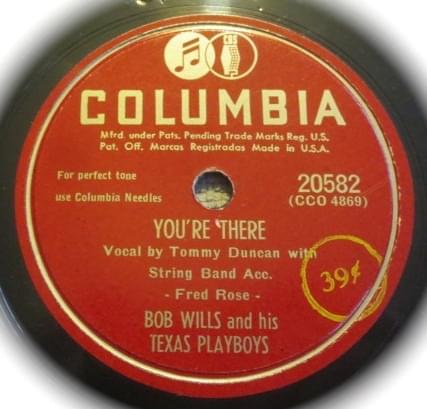
Bob Wills's "You're There" isn't just a simple country lament; it's a masterclass in portraying psychological haunting. The song circles around the inescapable presence of a past relationship, less about romantic longing and more about the way memories can warp one's present. Wills paints a picture of a narrator caught in a loop, their actions—"I get high, I get low, I move fast, I move slow"—rendered futile by the persistent shadow of this other person. It's a portrait of someone grappling with intrusive thoughts, where every attempt at emotional regulation is undermined by the unwelcome return of a specific memory. The simplicity of the lyrics belies the complexity of the internal struggle being depicted.
The repetition of "You're there" acts as a sonic anchor, mirroring the obsessive nature of memory itself. It's not just about recalling a face or a moment; it's about the way a past relationship can infiltrate every aspect of one's being, coloring experiences and dictating emotional responses. The lyrics hint at attempts to move on—"I can walk, I can run, I can grieve or have fun"—but these efforts are constantly thwarted. The narrator's awareness of the other person's return-"Everyone tells me that you're back in town" -is met with denial, a performance of indifference that further highlights the depth of the song's core conflict.
Ultimately, the song's meaning resides in its articulation of how the past shapes the present. The narrator's attempts to "seek," "hide," "turn her loose or be tied" all end with the same result: the inescapable presence of the other person. This isn't necessarily a love song; it's a song about the psychological residue of relationships, the way they linger in the mind long after they've ended. Bob Wills, through simple yet evocative lyrics, captures a universal human experience: the struggle to reconcile with the memories that define us.
 View Artist