Song Meaning
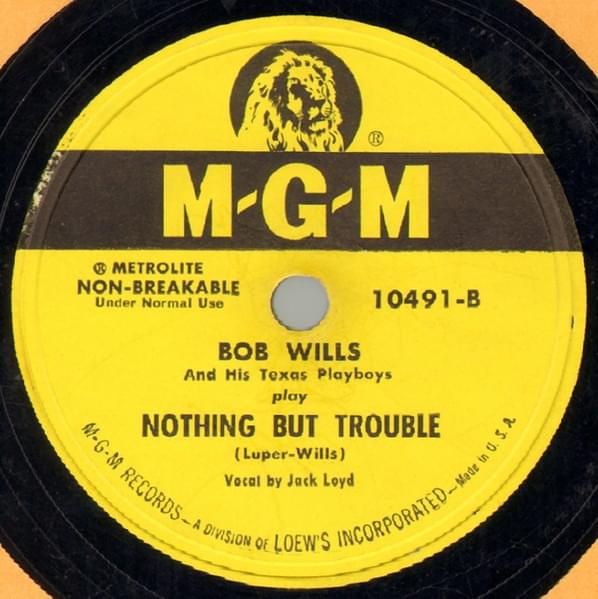
{"song_id": 12443666, "meaning": "Bob Wills' lament, \"Nothing But Trouble,\" isn't just a country tune; it's a raw nerve exposed. The song meaning resides in its cyclical portrayal of a life seemingly defined by hardship. The repeated refrain, \"Nothin' but trouble,\" acts as both a confession and a self-fulfilling prophecy. Wills isn't merely recounting misfortune; he's embodying a state of learned helplessness, where the expectation of adversity becomes the very lens through which he perceives the world. The trouble isn't just external; it's internalized, a \"weary heart\" and an \"achin' soul\" consumed by loneliness and regret. This isn't some abstract philosophical woe; it's grounded in the palpable pain of lost love.
The lyrics paint a picture of emotional dependency and the lingering agony of heartbreak. The lines, \"Lord, I'm so lonely since we've been apart\" and \"It nearly killed me when your love turned cold,\" are stark pronouncements of vulnerability. The \"trouble\" isn't just bad luck; it's the direct consequence of a severed connection, a void that echoes through the singer's existence. The mention of \"heartaches still worry my mind\" suggests an inability to move on, a fixation on the past that perpetuates the cycle of suffering. This persistent rumination feeds the initial wound.
The song's power lies in its stark simplicity. There's no attempt to sugarcoat the pain or offer false hope. The repetition of \"trouble\" serves to amplify the feeling of being trapped, a prisoner of one's own experiences. Even the phrase \"love is still burning, the love I left behind\" implies a responsibility or active participation in the singer's own misery. Bob Wills isn't just a victim; he's a participant in his own narrative of woe. The song becomes a haunting meditation on the self-inflicted wounds of the heart, a cautionary tale about the destructive power of dwelling on past sorrows. The \"lyrics analysis\" reveals a profound understanding of human fragility, making \"Nothing But Trouble\" more than just a country song; it's a study in the psychology of despair."}
 View Artist