Song Meaning
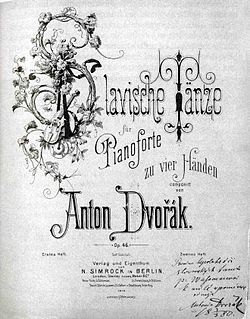
The piece "Slavonic Dance in A-flat major (Op. 46, No. 3)" presents itself as purely instrumental. There are no words to guide the listener's interpretation. This immediately sets a unique stage, inviting a direct engagement with sound alone. The absence of a lyrical narrative leaves all emotional texture to the music itself.
Without any lyrical content, the listener is left to project their own experiences onto the composition. This creates a subtle tension: the music provides a framework, but the specific emotional journey is entirely unscripted by words. The "lyrics" here offer no explicit conflict, instead providing a blank canvas for individual feeling.
The most striking "craft" choice is the complete omission of text. This isn't just a lack of words; it's a deliberate decision to let the musical composition stand unadorned by verbal cues. It suggests a confidence in the music's ability to communicate complex ideas and emotions without the need for a narrative overlay. The "lyrics" effectively disappear, making the music the sole storyteller.
Ultimately, the effectiveness of these "lyrics" lies in their non-existence. By stating "Instrumental," the piece declares its intent to communicate through melody, rhythm, and harmony alone. This allows for a deeply personal and unmediated experience, where the listener's imagination fills the space where words might otherwise reside. It forces a focus purely on the sonic landscape, making the music's inherent expressiveness the only "meaning" to be found.
 View Artist