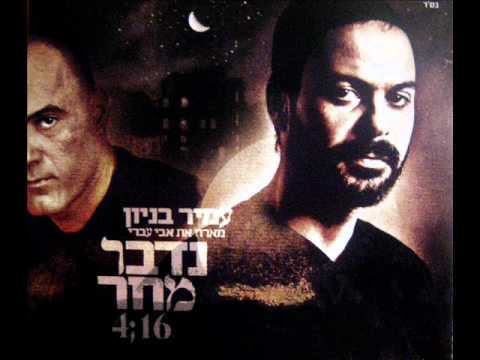
Song Meaning
The lyrics paint a stark picture of a solitary night journey, marked by repetition and a sense of weary searching. The narrator navigates a landscape of "כביש, עוד כביש" (road, another road) and "קיר, עוד קיר" (wall, another wall), emphasizing a feeling of being stuck or endlessly traversing the same bleak terrain. The dominant tone is one of exhaustion and a desperate need for rest, encapsulated in the repeated plea, "נו חיש אחי צריך למצוא מקום לישון הלילה" (Come on, brother, need to find a place to sleep tonight). This isn't just about physical shelter; it feels like a search for respite from a disorienting reality.
The central tension arises from the contrast between the narrator's internal struggle and the external world's apparent indifference or madness. While the narrator seeks sleep, they observe others: "עוד איש עוד מטורף מחכה למשיח" (another man, another madman waiting for the messiah) and "עוד איש רוקד מול רמזור עם הרחוב מתבדח" (another man dancing in front of a traffic light, joking with the street). These figures, along with "עוד הזיה על גיבור עם כנפים" (another hallucination about a hero with wings), highlight a disconnect between the narrator's grounded need and the surreal or delusional elements encountered.
The most striking aspect of the craft is the use of repetition and the reframing of a potentially negative term. The constant return to "עוד" (another/more) reinforces the feeling of an unending, monotonous struggle. Crucially, the phrase "משוגע זאת לא מילה גסה יותר" (crazy is no longer a dirty word) appears to offer a form of acceptance or resignation. It suggests that in this nightmarish, disorienting landscape, the lines between sanity and madness have blurred, and perhaps embracing this state is the only way to cope.
Ultimately, the lyrics resonate through their raw depiction of isolation and the quiet desperation for a simple resolution – sleep, and the promise of "נדבר מחר" (we'll talk tomorrow). The effectiveness lies in how the mundane, repetitive imagery of the night journey is infused with a profound sense of weariness and a subtle, yet powerful, shift in perspective regarding what it means to be "crazy." It captures a moment of profound exhaustion where the search for normalcy feels almost impossible, leading to a fragile peace found in deferring the struggle.