Song Meaning
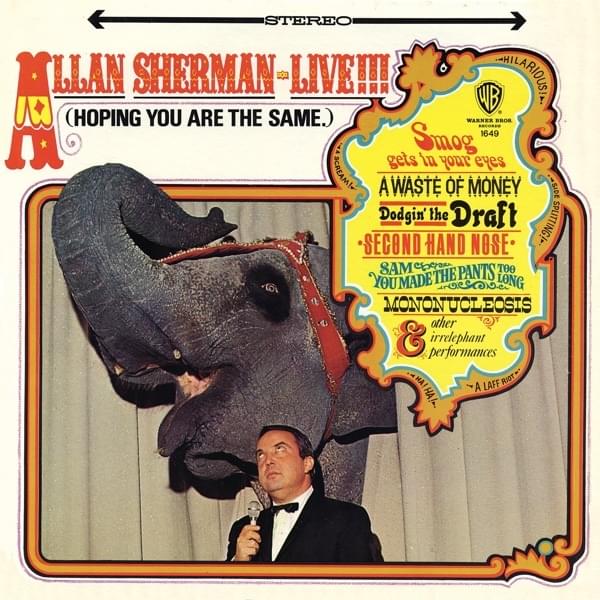
Allan Sherman's "Second Hand Nose" isn't just a comedic ditty; it's a surgically precise dissection of male insecurity and the absurd lengths to which one might go to attain societal validation. The song's protagonist, lamenting his perceived inadequacy in the looks department, embarks on a quest for physical enhancement, not through conventional means, but through the acquisition of 'second-hand' body parts. This immediately establishes a darkly humorous tone, highlighting the desperation fueling his transformation. The explicit rejection by women based on his intellect ('Girls don't go for IQ') underscores a deeper anxiety about fitting into conventional masculine ideals. It's a satire of the male ego, laid bare.
The choice of a 'second-hand nose' as the initial fix is particularly telling, implying a desire to not just improve, but to completely reinvent oneself using pre-existing, perhaps even 'proven,' components. The reference to Dr. Max Rose, whose patients resemble Barbra Streisand, adds another layer of comedic absurdity while slyly commenting on the homogenous beauty standards that drive cosmetic surgery. The subsequent laundry list of borrowed features—hair, teeth, contact lenses, elevator shoes—escalates the protagonist's transformation into a grotesque parody of the 'perfect' man. He's not aiming for authenticity, but for a Frankensteinian assemblage of desirable traits.
Ultimately, "Second Hand Nose" lands its punch with the vision of the transformed protagonist, now irresistible, cruising Second Avenue in a 'second-hand Stutz,' sniffing glue with adoring women. This bizarre tableau underscores the hollowness of his pursuit. Even with his borrowed charm, the activities are vapid, the connection superficial. The song cleverly suggests that true connection and self-worth cannot be bought or assembled from spare parts; they require something far more profound than a new nose and some elevator shoes. Allan Sherman manages to transform a silly premise into a poignant commentary on identity, acceptance, and the anxieties of modern life.
 View Artist