Song Meaning
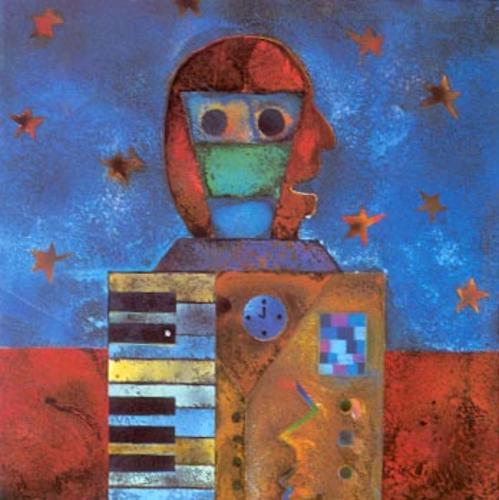
The lyrics paint a picture of a figure, the "hombre sintetizador," who arrives with a hesitant, blushing delivery. This synthesized man is immediately framed by a desire to know, a fundamental human impulse. The narrator grapples with distinguishing reality from illusion, questioning if what they perceive is genuine or a manufactured experience. This tension between knowing and believing, reality and freedom, forms the core of the song's disquiet.
The narrative introduces a "compensador" and their "perturbación," suggesting an external force or internal imbalance that fuels the synthesized man's existence. He's described as a "líder semiconductor," a leader whose very nature is about transmission and perhaps artificiality, like an electronic component. The imagery of the "televisor quiere profesar" and the "vidente quiere profanar" creates a surreal landscape where media and prophecy collide, blurring the lines between public pronouncements and forbidden truths.
The most striking aspect is the cyclical refrain: "A veces puedo saber, esto es realidad / A veces puedo creer, esto es libertad." This repetition emphasizes the narrator's wavering grasp on their own experience. The synthesized man, the media, and the prophetic figures all seem to contribute to this confusion, making the quest for concrete reality and genuine freedom an ongoing, uncertain struggle. The lyrics suggest that in a world saturated with artificiality and conflicting messages, the very definition of what is real and what constitutes freedom becomes fluid and elusive.
 View Artist