Song Meaning
{"song_id": 14695567, "meaning": "Zucchero's \"No Sere Yo\" operates in the delicate space between confession and reticence, a push and pull that defines so many of our attempts at expressing deep affection. The song's meaning isn't found in grand pronouncements, but rather in the acknowledgement of language's limitations when confronted with overwhelming emotion. \"It will be a song / That will tell you,\" Zucchero sings, almost outsourcing the task of conveying his feelings. This highlights a core human experience: the inadequacy we often feel when trying to articulate the immensity of love. The song itself becomes the message, a vessel carrying what words alone cannot. The repeated lines, \"Qué puedo decir no digo nada\" (What can I say, I say nothing), underscore this point. It's not a complete silence, but a knowing quietude, letting the music speak where his voice falters.
The lyrics paint a picture of languid devotion, steeped in imagery of nature and simple domesticity. \"Donde crecen las flores me he tumbado yo / Esperando a que llegue el próximo verano\" (Where the flowers grow, I have laid down / Waiting for the next summer to come) speaks to a patient, almost passive adoration, content to simply exist within the orbit of the beloved. The mention of \"campanas de domingo\" (Sunday bells) adds a layer of traditional, perhaps even nostalgic, romance. This idyllic setting contrasts with the internal struggle to express the depth of his feelings. The lines \"Te miro a los ojos y me deshago\" (I look into your eyes and I melt) suggest a vulnerability that words can't contain; the gaze itself becomes a form of communication, a dissolving of the self in the presence of the other.
Ultimately, \"No Sere Yo,\" the Zucchero track, explores the paradox of love's expression. It acknowledges the difficulty, even the impossibility, of fully capturing the experience in words, yet it persists in trying. The repeated \"Uhm, uhm\" sounds, almost like sighs, add to this sense of inarticulacy, a primal vocalization of emotion that transcends linguistic barriers. The final lines, \"En el silencio roto / Como hacen los ninos / Que es este amor, es mío / Es mío y sólo mío\" (In the broken silence / As children do / That this love is mine / Is mine and mine alone), suggest a possessiveness, a childlike claim on the emotion that is both pure and vulnerable. In the end, the song's power lies in its raw honesty, its willingness to expose the cracks in language when attempting to convey the most profound of human experiences."}
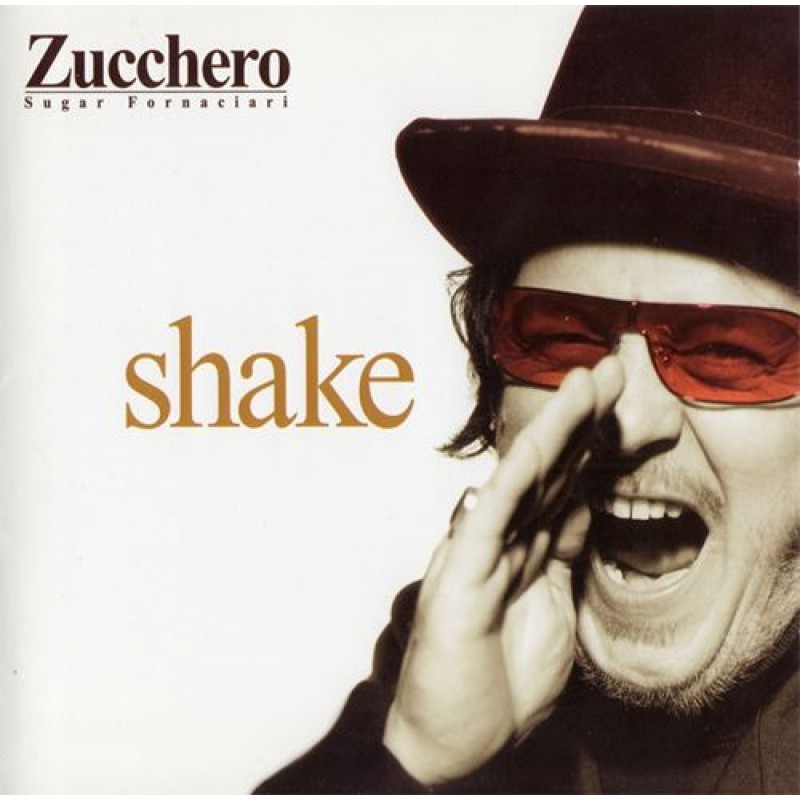
 View Artist