Song Meaning
The lyrics paint a stark picture of modern existence, where happiness is less about genuine joy and more about the mundane, often transactional, aspects of survival. The opening lines set a tone of weary resignation, with drawn curtains and a blank stare at the ceiling, while external distractions like actors on screens and a song about a shoelace offer little solace. The narrator's ritual of a cold shower and coffee is framed as a quasi-religious act, a desperate attempt to 'resurrect' for the sake of consumerist aspirations, symbolized by the repeated, almost desperate, cry for 'shining storefronts.'
The central tension arises from the crushing weight of daily life and the distorted perception of what constitutes happiness. The imagery of being 'smeared' onto buses and 'broken' in subway cars highlights a dehumanizing commute, leading to a grim thought of wanting to be 'pressed against the wall' – a desire for an end to the struggle. This is juxtaposed with the patriotic fervor of 'Faith, Tsar, and Fatherland,' suggesting a societal pressure to find meaning in grand, abstract ideals that feel increasingly hollow against the backdrop of personal grind.
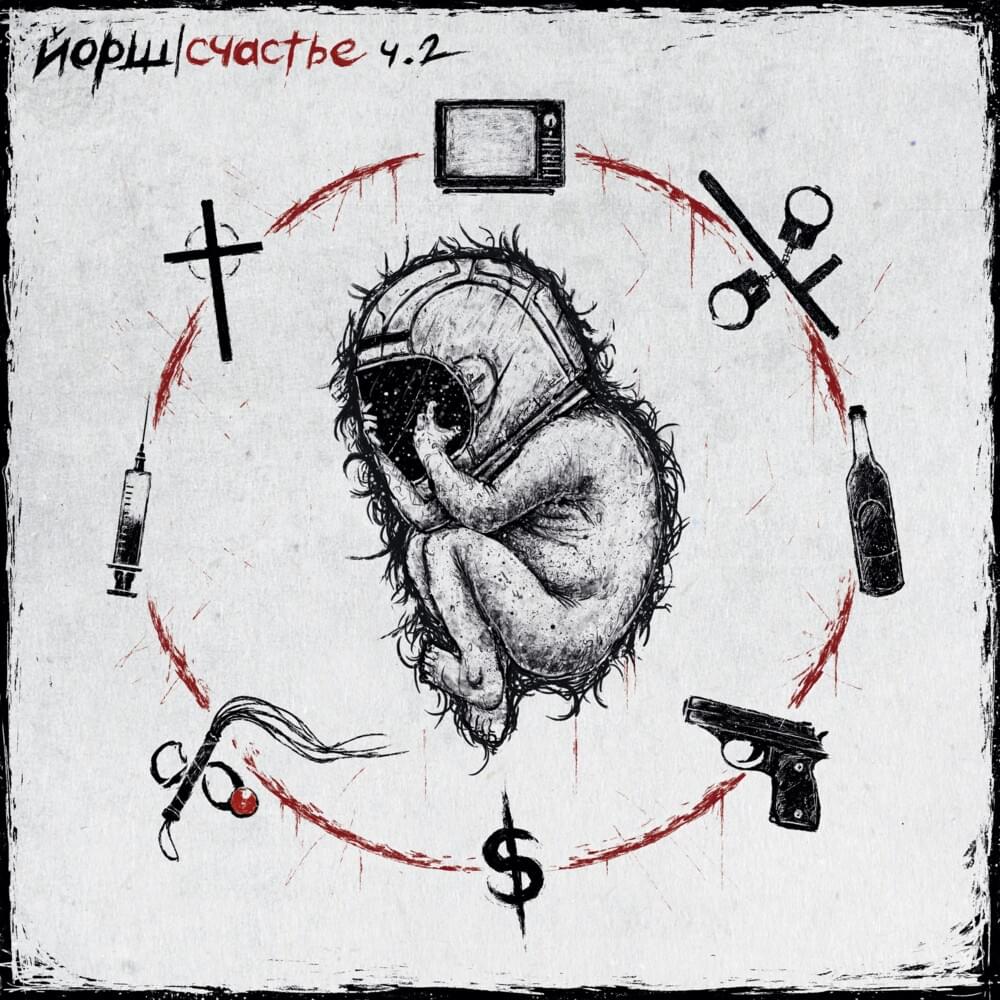
The most striking aspect is the redefinition of happiness through a series of bleak, transactional, and even oppressive images. Happiness is reduced to a 'paid credit installment,' a 'free seat on the metro,' or a 'TV series about cops and bandits.' The phrase 'oppressive feeling of freedom' is a profound paradox, suggesting that the very liberty to choose or exist is burdensome when stripped of genuine fulfillment. The repeated emphasis on these hollow victories underscores a profound societal malaise, where authentic joy has been replaced by a series of small, unsatisfying concessions.
Ultimately, these lyrics resonate because they articulate a shared, unspoken disillusionment. The narrator's assertion that 'we haven't forgotten how to laugh / It's just that happiness has become different' is a poignant, almost mournful, conclusion. The writing masterfully uses everyday, often bleak, details to expose a deeper emotional truth: the erosion of genuine happiness in favor of a more commodified, less satisfying substitute, leaving listeners to confront the unsettling reality of their own 'different' happiness.
 View Artist