Song Meaning
The lyrics paint a picture of a relationship that has slowly eroded, leaving both parties in a state of quiet confusion and resentment. The opening lines immediately establish a sense of missed opportunity and fading purpose, posing a fundamental question about when things shift from acceptable to broken. This sets a tone of passive observation, as if the narrator is watching a slow-motion collapse without understanding the precise tipping point.
The core tension lies in the unspoken grievances and the inability to bridge the communication gap. The repeated refrain, "If there is a way she'll admit she's wrong / She wonders why he went away," highlights a cycle of blame and bewilderment. The narrator, seemingly the "he" in question, feels unheard and unacknowledged, while "she" is left to question the departure without a clear understanding of her role in it. The phrase "He never said that much at all" underscores this profound lack of dialogue.
The writing cleverly uses repetition and subtle shifts to convey emotional stagnation. The phrase "He's waited real hard for things to change" is juxtaposed with "He's real mad and thinks about nothing." This suggests a build-up of frustration that ultimately leads to a numb resignation, where even anger dissipates into an "all or nothing" void. The insistent repetition of "If there is a way she'll admit she's wrong" hammers home the narrator's fixation on this single, unfulfilled condition for resolution.
This lyrical construction is effective because it captures the quiet agony of a relationship's demise, where the loudest moments are often the silences and the unanswered questions. The ambiguity surrounding the exact cause of the breakdown, coupled with the characters' inability to articulate their needs or acknowledge fault, creates a palpable sense of melancholic realism. The listener is left with the lingering feeling of a connection that simply "clunked" out, rather than exploding.
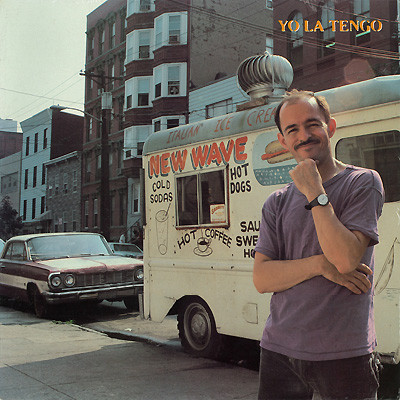
 View Artist