Song Meaning
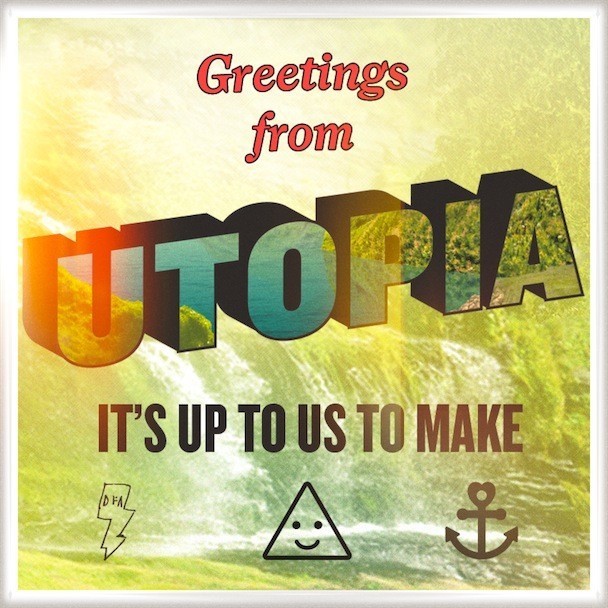
The lyrics paint a picture of a group, possibly in a shared, altered state, confronting the future. They initially gaze into it "in a visionary state," which is then clarified as "a psychoactive state." This sets a tone of seeking external answers or revelations. However, this hopeful search quickly pivots to a stark realization: "There's nothing in the future / It's up to us to make." This immediately establishes a core tension between passive reception and active creation of destiny.
The repeated, almost chanted "Utopia, utopia, utopia!" acts as both a desperate plea and a rallying cry. It's the ideal they're striving for, but the preceding lines suggest it's not a preordained destination. The lyrics then introduce a sobering duality: "Think fondly about life / But still think strongly about death." This juxtaposition highlights a mature, perhaps even grim, acceptance of mortality as a backdrop to the pursuit of an ideal existence, suggesting that true appreciation of life necessitates acknowledging its end.
The most striking craft element is the reframing of agency. After the initial vision quest, the narrator asserts, "A higher source is calling / And you don't have to commit / You don't have to submit!" This is a powerful rejection of external control, even from a "higher source." Instead, the future is presented as a reciprocal process: "The future works upon us / As we all work upon it." This cyclical, collaborative relationship between humanity and its unfolding destiny is the engine driving the repeated call for utopia.
Ultimately, these lyrics resonate because they capture a profound human desire for a better future while grounding it in the difficult, often unglamorous work of creation. The shift from passive visionary seeking to active, self-determined building, coupled with the honest confrontation of mortality, gives the repeated chant of "Utopia" a weightier, more earned significance. It's not a dream, but a directive.
 View Artist