Song Meaning
The lyrics paint a picture of a profound, almost hallucinatory realization about the nature of the future. It's not a predetermined destination waiting to be discovered, but rather a blank canvas that we are responsible for creating. This initial vision, described as a "visionary state, a psychoactive state," sets a tone of intense, altered perception, suggesting that understanding this truth requires a shift beyond ordinary consciousness. The stark pronouncement, "There's nothing in the future," immediately challenges conventional hope or dread, placing the onus squarely on human agency.
The central tension arises from the juxtaposition of this radical self-determination with the inescapable realities of existence. The lyrics acknowledge that "this is all we get," a sobering acceptance of our finite lives. This leads to a complex emotional state where one must "Think fondly about life, but still think strongly about death." It's a call to live fully while remaining acutely aware of mortality, a delicate balance that defines our present moment.
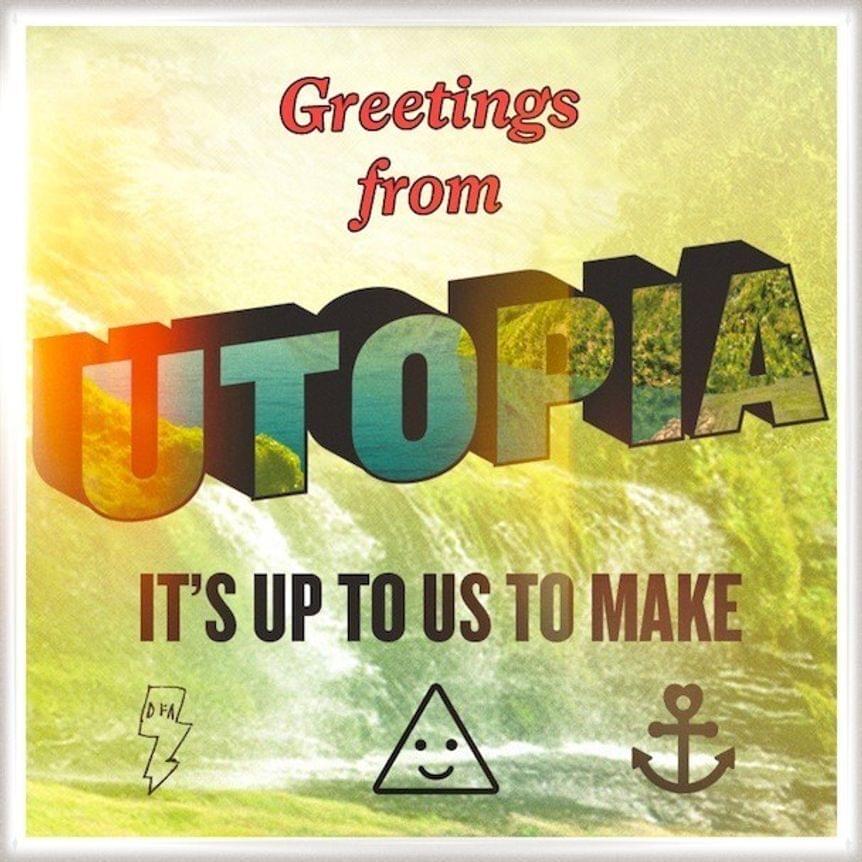
The repeated chant of "Utopia, utopia" acts as both an aspiration and a mantra, underscoring the core theme. However, its relentless repetition, especially after the assertion that the future is unwritten, suggests that utopia isn't a place to arrive at, but a continuous process of creation. The idea that "The future works upon us as we all work upon it" reinforces this active, reciprocal relationship, where our efforts shape what is to come, and in turn, that unfolding future influences us.
Ultimately, these lyrics resonate because they confront existential anxieties with a powerful call to action. By stripping away external prophecies and divine mandates – stating "you don't have to commit, you don't have to submit" to a "higher source" – the song empowers the listener. The effectiveness lies in its direct, almost blunt, articulation of responsibility, transforming the abstract concept of utopia into a tangible, personal project achievable through present action.
 View Artist