Song Meaning
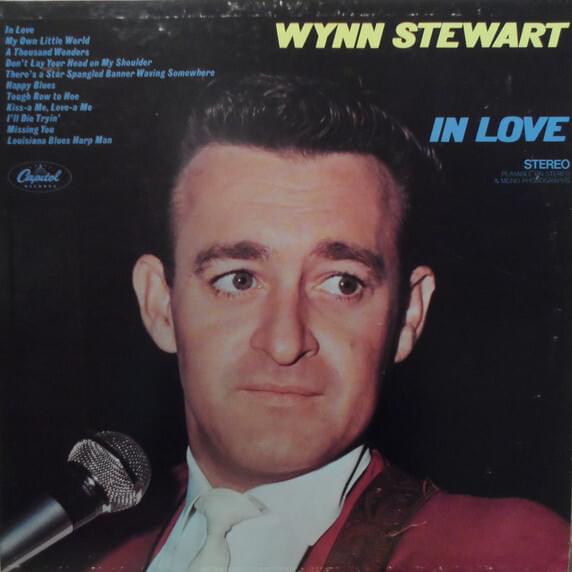
Wynn Stewart's "In Love" isn't just a country tune; it's a compact emotional directive disguised as a love song. The opening lines, a direct address to "little girl blue," immediately establish a dynamic – a plea to shed melancholy and embrace a shared existence. But the simplicity is deceptive. The phrase "troubles begin to live" is a fascinating inversion. It acknowledges that love isn't an escape from hardship, but rather a new arena where existing problems take on a different, shared form. Love, in Stewart's world, isn't the absence of trouble, but its transformation.
The lyrics then pivot into a kind of existential road map: "life is a trip, if you got the fare." This isn't just about romance; it's a broader commentary on seizing opportunities and carving out a new path. The repeated assertion of living "in, in love" functions almost like a mantra, a necessary condition for navigating life's complexities. It suggests that love isn't merely a feeling, but a mode of being, a lens through which experiences are filtered and understood. The song's meaning deepens as it presents love as a prerequisite for fully engaging with the world, not just a pleasant add-on.
The chorus, with its blend of pragmatism and fatalism, further complicates the interpretation. "Keep your eyes on the wheel, your mind on the grindstone" speaks to the necessity of diligence and focus. Yet, this is juxtaposed with the somewhat bleak admission that "life is life and it's barely worth living," a line that finds its resolution in the subsequent declaration: "You've got to be out to be in." This apparent paradox suggests that active participation, perhaps even a degree of risk-taking, is essential for finding meaning and fulfillment. In essence, Wynn Stewart's "In Love" presents a vision of love as not only a relationship but also a constant negotiation between pragmatism and existential yearning. It is a call to live fully, even when life feels barely worth living, by embracing connection and actively pursuing experience.
 View Artist