Song Meaning
The lyrics paint a stark contrast between the serene beauty of the natural world and the persistent chaos of human conflict. The "river flows so new and clear" and "heaven's stars look so peaceful," yet this tranquility is immediately undercut by the narrator's distrust of "nuclear bombs" and the reality of "men fighting men." This juxtaposition sets up a fundamental tension: the universe offers breathtaking, almost divine, vistas, but humanity seems incapable of internal peace. The narrator questions the purpose of existence, asking "what's your precious life but gift to you?" and suggests that the ultimate act of living is to fully engage with the present moment, wherever that may be.
The central conflict arises from the apparent impossibility of achieving lasting peace, whether on a global scale or in personal relationships. The line "Peace on Planet Earth / It never was, and how could it ever be?" expresses a deep-seated cynicism about humanity's capacity for harmony. Even the pursuit of "perfect love" is deemed futile when sought externally, as "it cannot be found in another woman or a man." This suggests that true fulfillment, or at least the pursuit of a "good time," must be an internal endeavor, a choice made within the confines of one's own existence.
The most compelling aspect of the writing is the narrator's evolving perspective on agency and choice. Initially, the lyrics present a world of external forces – "nuclear bombs," "fighting men," "the king." However, the third verse shifts dramatically, with the narrator realizing, "And now I see that it's all mine to choose." This internal revelation transforms the vastness of "time and space" from a potentially overwhelming cosmic backdrop into a personal arena for decision-making, where one can "love, to hate, kill, or create." The power, it seems, is not in external dominion but in the internal capacity to act.
Ultimately, these lyrics resonate because they capture a universal human experience: grappling with the immense scale of the universe and the often-disappointing realities of human behavior, while simultaneously discovering the profound power of individual choice. The repeated refrain, "What better place to spend them than time and space?" evolves from a question about how to spend one's talents and have a good time, to a declaration of agency in a world that offers "everything to gain and everything to lose." The final, haunting lines, "We're all livin' in time and space... / But I'm lost in time and space...." underscore the bittersweet realization that while we possess the freedom to choose, the sheer magnitude of existence can still leave one feeling adrift.
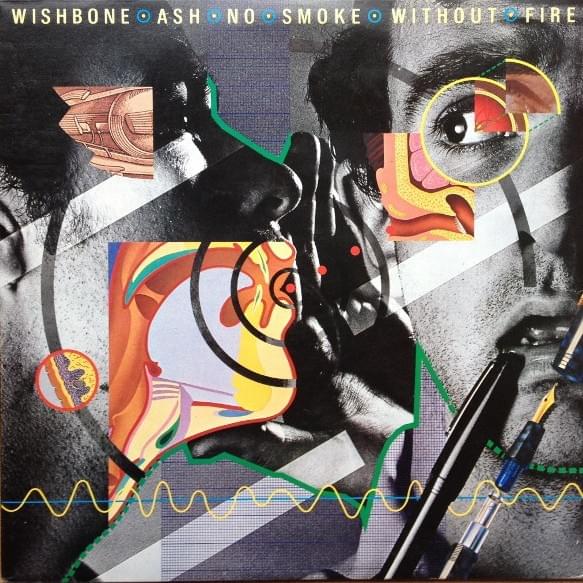
 View Artist