Song Meaning
The lyrics paint a picture of profound isolation and a yearning for escape, set against a backdrop of past glories and present decay. The opening lines immediately establish a sense of loss, with figures and ideals of the past – "peg and Meg and Paris' love" – now vanished. This departure is mirrored by a stark transformation among those who remain, their former finery replaced by coarse "sack," suggesting a fall from grace or a grim reality setting in. The dominant tone is one of melancholic resignation, a quiet despair that permeates the speaker's present existence.
The central tension arises from the speaker's desire to flee this diminished reality and retreat into a world of pure imagination or memory. The imagined ascent "up there, / Amid the cloudy wrack" is not a literal journey but a symbolic escape from the tangible world. This desire is amplified by the speaker's profound aloneness, a state that seems to breed a peculiar form of internal life. The contrast between the lost grandeur of the past and the bleakness of the present fuels this desperate need for a different kind of existence.
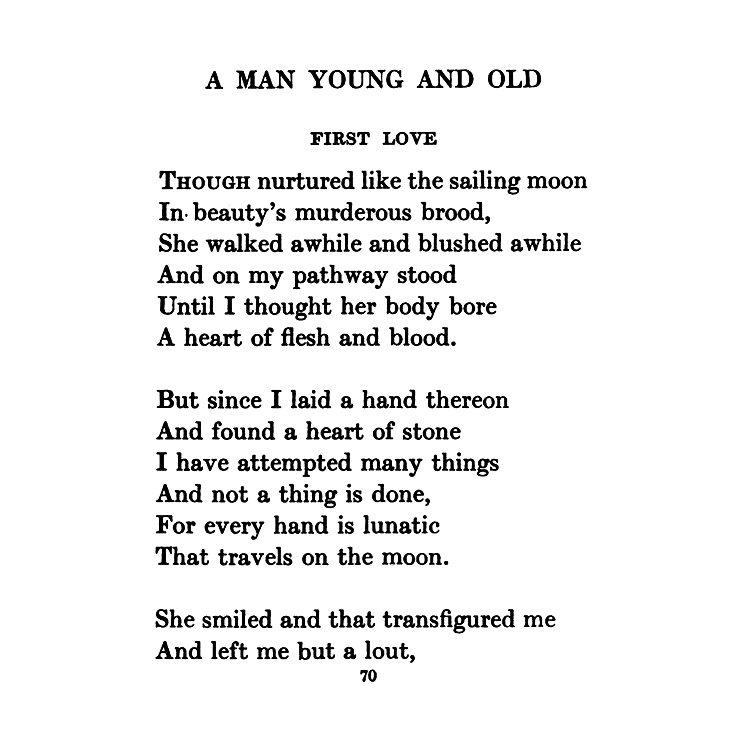
A striking image of this internal retreat is the speaker's wish to hear a "peacock cry" if they were alone, an act deemed "natural to a man / That lives in memory." This is followed by the even more surreal act of nursing a stone and singing it a lullaby. These are not actions of external engagement but intensely private, almost ritualistic behaviors born from an overwhelming solitude. The peacock's cry, often associated with pride and display, here becomes a solitary expression of a past self or a desired wildness, while the stone lullaby signifies a deep, perhaps desperate, attempt to find solace and nurture within the inanimate, a testament to the speaker's complete detachment from conventional human connection.
This lyrical passage achieves its emotional weight through its stark contrasts and the unsettling intimacy of its imagined actions. The juxtaposition of historical or mythical figures with the mundane "cloudy wrack" and the shift from "silk" to "sack" highlights a world where ideals have crumbled. The ultimate effectiveness lies in the speaker's profound, almost surreal, embrace of solitude, transforming memory and even inanimate objects into companions. The act of singing a stone to sleep is a powerful, albeit bleak, articulation of a spirit adrift, finding its only solace in the most unexpected and solitary of gestures.
 View Artist