Song Meaning
The lyrics paint a stark picture of human existence as a fleeting chemical and biological process. The opening lines strip away abstract concepts like "Faith and Hope and Love," reducing them to mere "chemistry." This sets a tone of detached observation, suggesting that the grand narratives we build our lives around are ultimately reducible to natural forces. The repeated phrase "We've lost control / We're out of touch" underscores a sense of powerlessness against these fundamental realities.
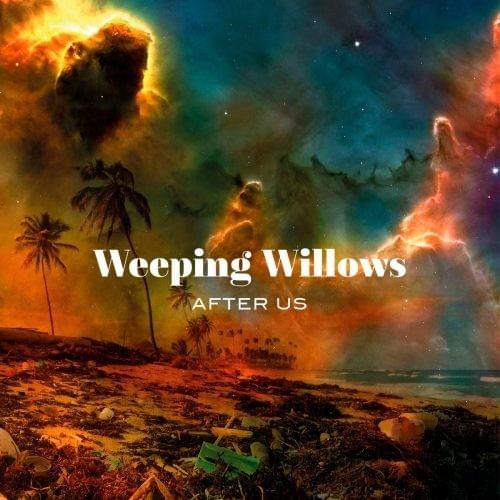
The central tension arises from the juxtaposition of human ephemerality against the enduring cycles of the natural world. While the narrator acknowledges that "All creatures on planet / And earth will die," the persistent refrain "life continues after us" offers a form of cosmic indifference. This isn't a comforting thought, but rather a statement of fact, highlighting the insignificance of individual lives and even collective human endeavors in the grand scheme of existence.
The craft here relies heavily on a systematic deconstruction of perceived meaning. The lyrics move from abstract virtues to biological processes, then to fundamental physics ("Matter, energy, time and space"), and finally to the eventual silence of human expression ("Love songs won't be / Sung no more"). This progression creates a sense of inevitable diminishment, yet the unwavering assertion that "life continues after us" provides a peculiar, almost cold, anchor. It’s a reminder that the universe will persist, indifferent to our triumphs and our sorrows.
What makes these lyrics resonate is their unflinching gaze at mortality and the vastness of time. By reducing human experience to its constituent parts and contrasting it with the ongoing natural world, the song forces a confrontation with our own impermanence. The effectiveness lies in this blunt, almost scientific, approach to existential dread, leaving the listener to ponder their place within a universe that will simply keep going, whether we're here to witness it or not.
 View Artist