Song Meaning
The lyrics present a stark dichotomy, first defining the speaker as a 'troll' through a series of harsh, almost monstrous epithets. These descriptions evoke primal forces: 'stone-faced,' 'giant's blood-sucker,' 'curse of the hail-sun,' 'watcher of the corpse-river.' The repeated question, 'What is a troll but that?' hammers home a self-definition rooted in destructive, elemental power and a sense of otherness.
This aggressive self-identification is then directly contrasted with a new persona: the 'skald.' The epithets shift dramatically, now focusing on creation, generosity, and poetic craft. The speaker is the 'ship-builder of Viðurr,' 'Gautr's gift-shaker,' 'Yggr's ale-bearer,' and 'maker of poetry's mind.' This redefinition pivots from destructive force to the generative power of language and art.
The core tension lies in this dual identity, presented as two sides of the same coin. The lyrics suggest that the power once defined as monstrous ('troll') is now channeled into the creative act of the skald. The 'mind of poetry' is born from the same source that could be seen as a 'curse' or a 'watcher of the corpse-river,' implying that profound creation can emerge from dark, powerful origins.
This transformation is powerfully crafted through the parallel structure and the direct address. The repetition of 'kalla mik' ('they call me') frames both identities as external perceptions, but the concluding questions assert them as internal truths. The effectiveness lies in the visceral imagery of the 'troll' juxtaposed with the elevated, almost divine attributes of the 'skald,' making the act of poetry itself seem like a potent, almost alchemical force.
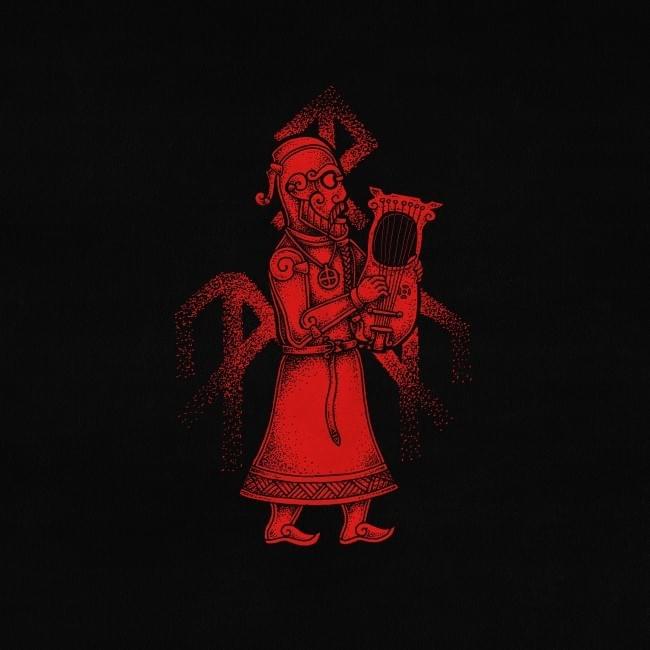
 View Artist