Song Meaning
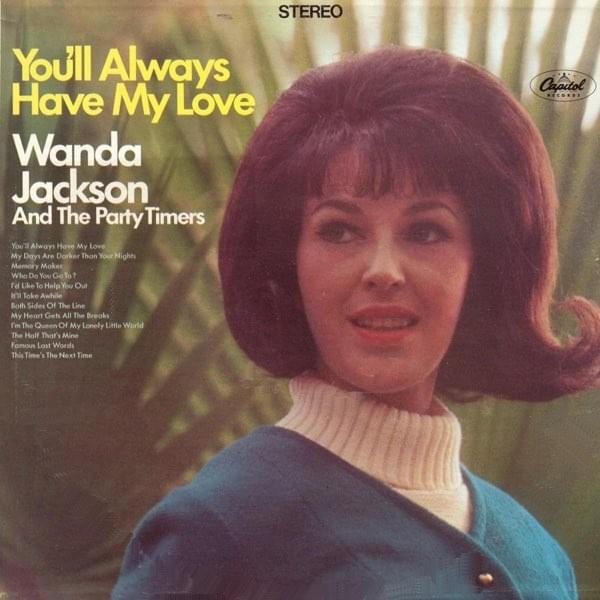
Wanda Jackson's plaintive cry in "Who Do You Go To?" isn't just a question; it's a raw, exposed nerve. The song meaning hinges on that central, repeated line: a desperate plea for understanding in the face of betrayal. It's a universal sentiment, but Jackson delivers it with a uniquely vulnerable edge, turning a country music staple – infidelity – into a psychological study of abandonment. The lyrics paint a picture of a woman grappling with the tangible reality of her lover's absence, not just physically, but emotionally. She's haunted by the idea of another woman supplanting her, not just in his bed, but in his affections, his confidences. "Who hears the sweet things you once said to me?" she asks, highlighting the intimate, irreplaceable connection now transferred elsewhere. This isn't just about the act of cheating; it's about the theft of shared history and the shattering of trust.
The power of "Who Do You Go To?" lies in its simplicity and directness. Jackson doesn't rely on elaborate metaphors or flowery language. Instead, she lays bare the insecurities and anxieties that plague someone facing the end of a relationship due to another person. Lines like "Who is this other woman that makes me walk the floor?" and "Why are her arms more inviting?" are stark admissions of vulnerability, highlighting the narrator's struggle to comprehend her replacement's allure. She is not angry, she's confused and desperate. The song avoids accusatory rage, choosing instead to focus on the self-doubt and the gnawing questions that accompany such a painful experience.
Ultimately, "Who Do You Go To?" resonates because it taps into the primal fear of being replaced, of being deemed inadequate. The repeated question isn't necessarily seeking an answer; it's a manifestation of the narrator's internal turmoil. It's a way of processing the incomprehensible: the realization that the person she thought she knew, the person she shared her life with, has chosen someone else. The 'other woman' is almost irrelevant; the song is less about her specifics and more about the narrator's shattered sense of self-worth in the wake of abandonment. The raw honesty in Jackson's delivery transforms a simple country lament into a powerful exploration of heartbreak's psychological impact.
 View Artist