Song Meaning
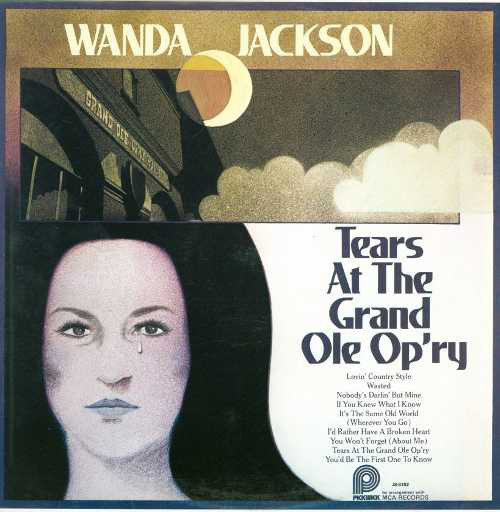
Wanda Jackson's "Tears at the Grand Ole Opry" isn't just a country lament; it's a masterclass in emotional displacement. The Grand Ole Opry, usually a symbol of celebration and communal joy in country music, becomes the stage for private grief. The lyrics drip with irony, contrasting the public spectacle of happiness with the singer's internal agony. It's a brilliant subversion: Nashville's most famous venue transforms into a personal hell. The song’s genius lies in its stark simplicity, mirroring the raw, unfiltered pain of heartbreak. The repetition of "tears at the Grand Ole Opry tonight" acts as a haunting refrain, underscoring the inescapable nature of her sorrow. Each cheerful melody becomes a fresh wound. It's a psychological portrait of grief amplified by environment.
Jackson doesn't delve into the specifics of the lost love. Instead, she focuses on the sensory experience of mourning within a space dedicated to joy. The lines, "All the songs that I will hear will just bring sadness to my ear," highlight how grief can distort even the most pleasurable experiences. This is more than just a broken heart; it's a disruption of perception. The Grand Ole Opry, usually a source of comfort and connection, now serves as a constant reminder of what’s been lost. It's a form of emotional torture, self-inflicted yet unavoidable. She is present, but emotionally absent.
Ultimately, "Tears at the Grand Ole Opry" is about the isolating nature of grief. Surrounded by music and celebration, the singer remains utterly alone in her sorrow. The song's power resides in its ability to capture the universal experience of heartbreak while grounding it in a uniquely country context. It’s a reminder that even in the most public of spaces, the most profound emotions are often intensely private. The Grand Ole Opry, in this context, becomes a symbol of the disconnect between outward appearances and inner turmoil, a theme that resonates far beyond the confines of country music.
 View Artist