Song Meaning
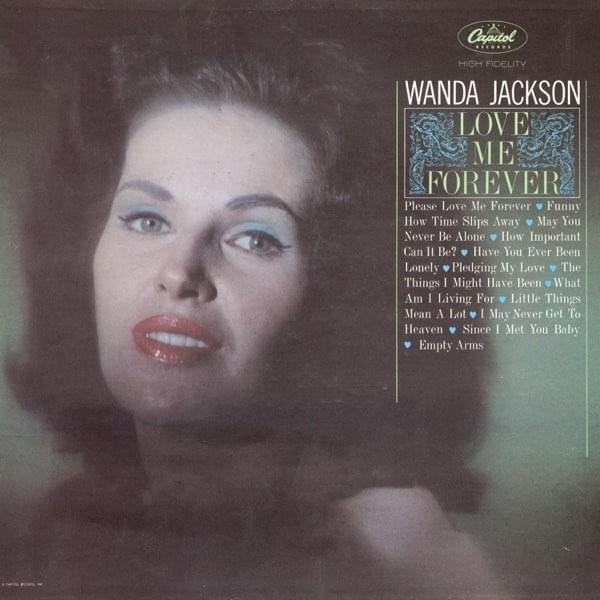
{"song_id": 14237533, "meaning": "Wanda Jackson's rendition of \"Since I Met You Baby\" is more than a simple love song; it's a raw, unapologetic testimonial to transformative love. The lyrics, though straightforward, carry the weight of a seismic shift in the narrator's identity. The opening lines, \"Since I met you, baby, my whole life has changed,\" aren't mere declarations but a recognition of love's profound power to redefine one's existence. The subsequent line, \"And everybody tells me that I am not the same,\" hints at a public perception of this change, suggesting a visible alteration in her behavior or demeanor. This isn't just personal evolution; it's a metamorphosis witnessed and commented upon by the outside world.
The song's core message revolves around the self-sufficiency born from profound connection. The lines, \"I don't need nobody to tell my troubles to / 'Cause since I met you, baby, all I need is you,\" underscore a newfound sense of completeness. The need for external validation or emotional support dissolves, replaced by an all-encompassing reliance on the partner. This can be interpreted as a somewhat idealized, even potentially risky, dependence, but within the context of the song, it's presented as a liberating force. It suggests that the singer has found in her lover a confidant and a source of strength that eclipses all others.
Ultimately, \"Since I Met You Baby\" is about the surrender to love's transformative potential. The final verse, where she sings, \"Since I met you, baby, and you're my man / I'm gonna try to please you in every way I can,\" reveals a willingness to prioritize the relationship and cater to her partner's needs. While a modern listener might critique this sentiment as potentially submissive, it's crucial to understand it within the historical context. Jackson's delivery imbues these lines with a sense of empowerment rather than subservience. This isn't about losing oneself, but rather about actively participating in the creation of a shared reality, shaped by mutual affection and devotion. The song, therefore, serves as a powerful, if somewhat complex, ode to the all-consuming nature of love and its capacity to reshape our lives."}
 View Artist