Song Meaning
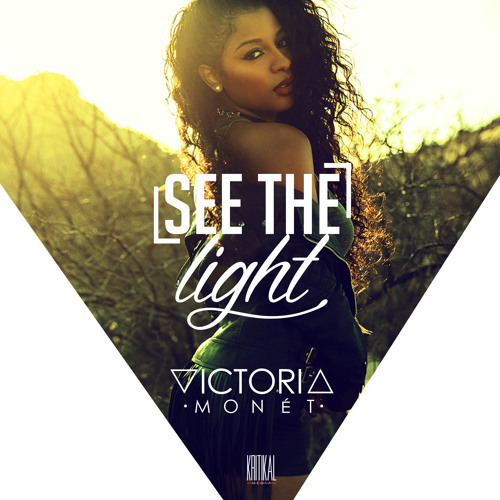
{"song_id": 13598443, "meaning": "Victoria Monét's \"See The Light\" isn't just another saccharine pop anthem preaching relentless positivity. Instead, it delves into the crucial role that darkness and negativity play in truly appreciating joy. The song's core message revolves around the idea that happiness can't exist in a vacuum; it requires contrast to be fully realized. Monét subtly acknowledges the inherent complexities of human emotion, suggesting that those difficult, 'moody' aspects of ourselves are not flaws to be suppressed, but rather integral components of our overall experience. The opening lines immediately establish a sense of isolation – 'No one in the world appreciates your attitude…accommodates your many moods' – painting a picture of someone who feels fundamentally misunderstood.
However, the pre-chorus offers a turning point with the simple, yet profound, declaration: 'But I do, I do. You're just like me. And I'm just like you.' This suggests a deep connection rooted in shared experience and mutual understanding, implying that empathy is the key to accepting not only others, but also ourselves, in our totality. The line 'baby light needs the dark' encapsulates the song's central theme: that moments of happiness ('light') gain their significance precisely because they are punctuated by periods of sadness or struggle ('dark'). It's a nod to the psychological reality that we often only recognize the value of something when it's absent.
The chorus reinforces this idea, questioning the unrealistic expectation of constant happiness: 'How can we be happy all the time? Lucky all the time?' Monét argues that it's necessary to experience 'the middle of the night' – the difficult, challenging times – in order to truly recognize and appreciate 'the little moments when we see the light.' The repetition of 'When we see the light' serves as a mantra, emphasizing the importance of acknowledging and embracing both the positive and negative aspects of life. The second verse cleverly alludes to differing perspectives ('Some say white and gold, Some say the world is black and blue'), highlighting the subjective nature of reality and the futility of imposing a single, universal standard of feeling or understanding. Ultimately, \"See The Light\" is a sophisticated exploration of emotional nuance, advocating for a more balanced and accepting approach to the human experience."}
 View Artist