Song Meaning
Vern Gosdin’s "You're Not By Yourself" excavates the raw nerve of abandonment with a chillingly simple premise: even in utter solitude, the ghost of what's left behind lingers. The song avoids the predictable tropes of jealousy or anger, instead dissecting the psychology of a departure that seems motiveless, or at least stubbornly unexplained. The narrator hangs suspended between hope and resignation, pleading with a partner on the brink of leaving, not for another person, but seemingly for the sake of leaving itself. "You're leaving without a reason / At least a reason you just won't say," he sings, highlighting the agonizing ambiguity that cuts deeper than a clear betrayal. This isn't about another lover; it's about a void.
The emotional core of the song lies in the narrator's almost masochistic willingness to endure any pain, as long as it guarantees the other person's happiness or, at the very least, prevents their complete isolation. The lines, "And if you thought your leaving would kill me / Honey would you still go anyway / And if you thought your staying would save me / Ooh I'm ready to be saved," reveal a desperate vulnerability. He’s offering himself as a sacrifice, prepared to be destroyed by their departure if it somehow serves a greater purpose for them. This speaks to a co-dependent dynamic, where the narrator's well-being is intrinsically tied to the other person's state of mind.
Ultimately, "You're Not By Yourself" offers a bleak comfort. The repeated assurance that "if you're all alone you're not by yourself" isn't necessarily a message of hope, but rather an acknowledgment of the inescapable weight of the past. Even in total isolation, the echo of shared experiences, the residue of a broken relationship, remains. The song suggests that escaping a connection entirely is impossible; the past, like a phantom limb, continues to exert its presence, making true solitude an illusion. Gosdin masterfully captures the quiet desperation of a love unraveling, leaving behind a haunting portrait of loneliness that is never truly solitary.
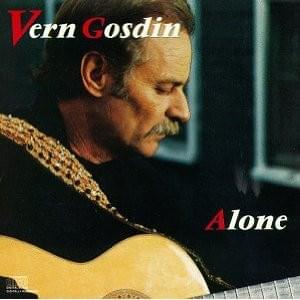
 View Artist