Song Meaning
The lyrics paint a stark, nocturnal scene, immediately asking the listener if they possess the 'sight' to perceive the encroaching darkness. The sun is fading, and a creature called 'Ulvsblakk' is described as a 'kveldknarren' (evening owl or night-jar) and 'tuftekallen' (a figure associated with mischief or the underworld), both of which 'farar' (travel or roam) through the night air. This establishes a tone of unease and supernatural observation, where ordinary natural phenomena are imbued with a sinister, almost mythical quality.
The central tension arises from this perceived shift in reality, where the 'tia har vørti mørk' (time has become dark) and 'Tora ropar høgt' (Thor calls out loudly), suggesting a disruption of natural order or a descent into a more primal, perhaps mythological, state. The repeated question, "Har du synen?" (Do you have the sight?), implies that this ominous transformation is not universally apparent, requiring a specific perception or awareness to acknowledge its presence. The narrator seems to be observing this transition with a mixture of dread and perhaps a strange fascination.
The most striking element is the personification of the night and its inhabitants, particularly 'Ulvsblakk.' This entity is not just a creature but a harbinger of a darker era, associated with both the 'nauvakker' (awful beauty) of the twilight and the 'skumt' (darkness) of its passage. The inclusion of "evil whisper" and "laughter" adds a layer of psychological horror, suggesting that the atmosphere itself has become 'uggin' (unsettling or creepy), a palpable shift from the 'dag' (day) that is now seemingly 'kvammes' (a difficult or unpleasant passage).
Ultimately, the lyrics are effective because they create a potent, claustrophobic atmosphere through vivid, unsettling imagery and a sense of impending doom. The narrator's plea for the listener to 'see' implies a shared experience of this encroaching darkness, making the listener complicit in the unsettling vision. The final line, "For ulvsblakk er me" (For Ulvsblakk are we), suggests a profound, perhaps inescapable, connection to this dark entity, blurring the lines between observer and the observed, and leaving the listener with a chilling sense of identification with the night's sinister forces.
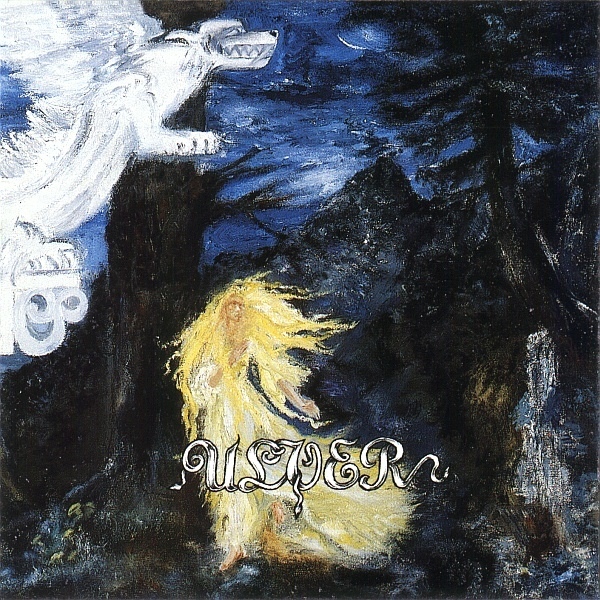
 View Artist