Song Meaning
The lyrics paint a stark picture of global food disparity, contrasting abundance with widespread hunger. We see vast quantities of wheat ripening in Canada, enough to feed many, yet the beautiful, brown-skinned children in Bombay and Hyderabad remain unfed because they cannot afford it. This immediately establishes a core tension: the existence of plenty alongside the inability of those who need it most to access it.
The same pattern repeats with fruit ripening on trees, fragrant in May, but unseen by many in Chile and Paraguay. These fruits are piled high, only to be destroyed by people, suggesting a deliberate waste or a system that prioritizes something other than consumption. The narrator notes that 'we' have cultivated the fruit and grain, making gardens and fields rich, yet children in Baghdad and Hagramaud still go hungry. This collective 'we' implies a shared responsibility or at least a shared awareness of the problem.
The most striking aspect is the direct, almost blunt, assertion of the solution: "We could already heal the hunger / If only one had to distribute better." This isn't a lament about scarcity but a pointed critique of distribution and access. The lyrics suggest that the problem isn't a lack of food production but a failure in human systems – economics, politics, or simply will – to ensure equitable sharing. The simple, almost childlike phrasing of the solution makes the ongoing hunger feel even more like a preventable tragedy.
This directness is what makes the lyrics hit so hard. They bypass complex economic theories and focus on a fundamental injustice. The juxtaposition of images – ripening wheat, fragrant fruit, hungry children, and wasted bounty – creates a powerful emotional resonance. The final lines leave the listener with a clear, albeit uncomfortable, truth: the capacity to end hunger exists, but the will to distribute fairly seems to be the missing ingredient.
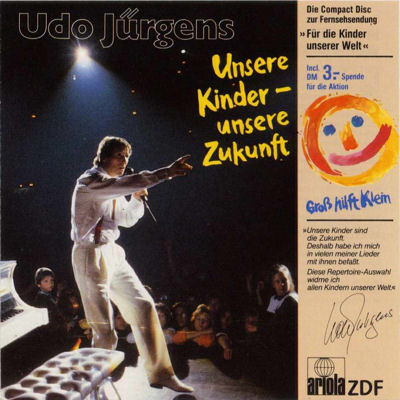
 View Artist