Song Meaning
Tom T. Hall's "Too Many Do Goods" isn't just a country lament; it's a pointed critique of performative morality versus genuine action. The song's core idea hinges on the imbalance between those who posture as virtuous ("do-goods") and those who contribute tangible labor and support. Hall isn't condemning kindness, but skewering the hypocrisy of intellectualizing solutions while ignoring immediate, practical needs. It's a working-class frustration distilled into song. The lyrics suggest a society oversaturated with thinkers, poets, and committees, all offering abstract solutions while basic human needs go unmet. Hall sees a disconnect between lofty ideals and the simple act of 'bendin' down and pickin' up your brother.'
At its heart, "Too Many Do Goods" challenges the listener to examine their own contributions. Are we lost in philosophical debates and symbolic gestures, or are we actively engaged in alleviating suffering? The song's repeated chorus reinforces this central tension, contrasting the abundance of 'do-goods' with the scarcity of 'hard working men' and 'lendin' a hand.' The mention of 'children who starved plumb to death on advice' is a particularly stark indictment of empty rhetoric, suggesting that well-intentioned guidance is useless without concrete support. It's a condemnation of inaction masked as concern, a theme that still resonates deeply today.
Beyond its immediate message, the song also hints at a deeper psychological truth: that performative altruism can be a form of self-aggrandizement. By focusing on grand gestures and abstract principles, individuals may avoid confronting their own complicity in systemic problems. Hall's lyrics subtly question the motives behind these displays of virtue, suggesting that true compassion requires more than just good intentions; it demands tangible effort and a willingness to get one's hands dirty. In the end, "Too Many Do Goods" is a call for authenticity and a reminder that genuine kindness speaks louder than any sermon or pamphlet.
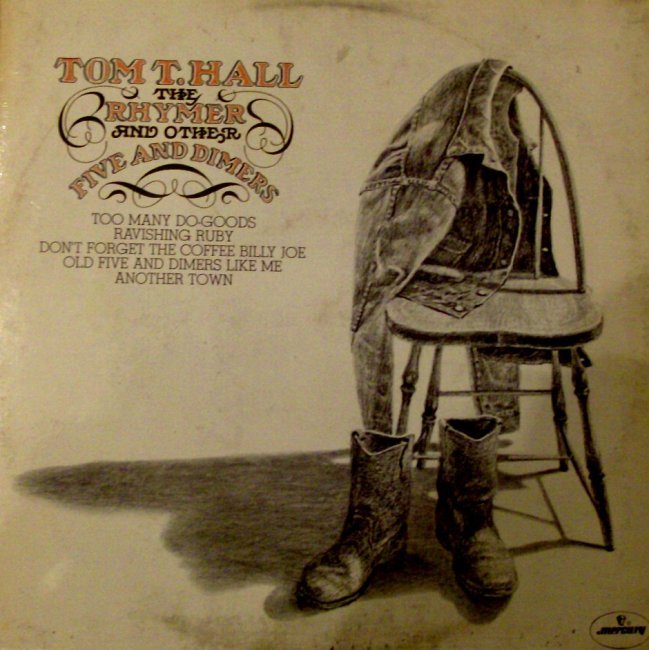
 View Artist