Song Meaning
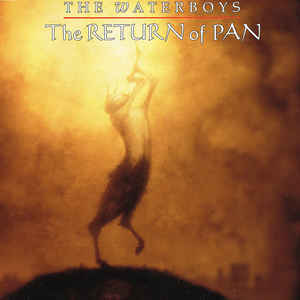
The lyrics paint a striking scene of a wedding day interrupted by the sudden, almost unbelievable reappearance of a pagan deity. The narrator, standing on a balcony with his new bride, witnesses a figure that is unmistakably the great god Pan, described with primal imagery like "lightning eyed and cloven hooved." This isn't a distant myth; Pan is presented as being "alive!" and moving "amid the modern world in disguise," suggesting a hidden, persistent presence beneath the surface of everyday life. The contrast between the sacredness of a wedding and the intrusion of an ancient, wild god immediately establishes a sense of awe and disruption.
The central tension arises from the clash between old and new belief systems, specifically the supposed death of Pan and the ascendance of Christ. The lyrics recall a sailor hearing "Pan is dead!" on the night Christ was born, a pivotal moment meant to signify the end of the old gods. However, this declaration is immediately undercut by the defiant cry, "Pan is dead! Long Live Pan!" This paradox suggests that despite pronouncements of his demise and the rise of new faiths, Pan's essence, his wild spirit, never truly vanished. The narrator’s personal encounter solidifies this, demonstrating that the ancient power is not just a historical footnote but a tangible, living force.
The most compelling craft element is the direct, almost conversational assertion of Pan's continued existence, particularly in the final stanza. After dismissing the idea that "the Gods are just a myth," the narrator poses a rhetorical question: "But guess who I've been dancing with." This implies an intimate, personal encounter with Pan, a direct refutation of his supposed death. The repetition of "The great god Pan is alive!" acts as a powerful refrain, reinforcing the central idea with unwavering conviction. The lyrics masterfully blend ancient mythology with a modern, personal narrative, making the unbelievable feel immediate and real.
This lyrical construction is effective because it grounds a fantastical concept in a relatable human experience – a wedding day – and then pivots to a profound, personal revelation. The juxtaposition of the mundane (a balcony, a bride) with the mythic (Pan, cloven hooves) creates a powerful sense of wonder and unease. The lyrics don't just tell us Pan is alive; they show us through the narrator's direct, almost boastful claim of having "been dancing with" him, making the ancient god feel surprisingly present and potent in the contemporary world.
 View Artist