Song Meaning
The lyrics of "Hightimes" immediately plunge into a world of lost intensity and a weary resignation. The repeated phrase, "Tell me somethin' I don't know," suggests a narrator who has heard it all, perhaps about the allure or dangers of these all-consuming "Hightimes." These experiences, it seems, have a way of both enchanting and eroding, able to "undermine" and "chase em 'til your blind."
There's a poignant tension between physical presence and emotional absence. The narrator observes, "Now you're lyin' next to me," yet quickly follows with the stark realization that this is "The one place that you shoulda' stayed" or "The place I said you'd always be." This juxtaposition highlights a profound disconnect, implying that while the physical proximity might remain, the essence of what once was has "gone away." The repeated struggle to "Let go" underscores the difficulty of releasing this past, even as it becomes clear that the "hightimes" have "strayed."
A central memory anchors this emotional landscape: a drive to "the top of castle hill," overlooking "The lights of the town below." From this elevated vantage point, the other person offers a profound observation: "Things look twice as small / When you have been livin' tall." This suggests that the intensity of their shared "hightimes" fundamentally altered their perspective, making ordinary life seem diminished. Later, the idea that "Things look twice as far / When you have been gone so long" adds another layer, implying that distance, both physical and temporal, further distorts reality.
Ultimately, the lyrics capture the complex process of letting go, even when the past was powerful enough to "forgave / Rips and tears." The narrator's declaration, "But I don't care," marks a painful turning point, a forced indifference born of disillusionment. The final, cutting line, "Them hightimes forgave, but look at you / Now," delivers a stark, present-tense judgment, revealing the lasting impact of those intense experiences and the irreversible change they wrought.
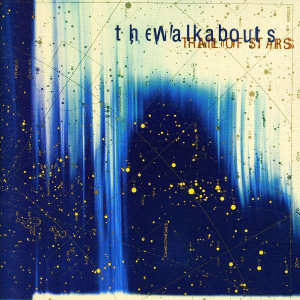
 View Artist