Song Meaning
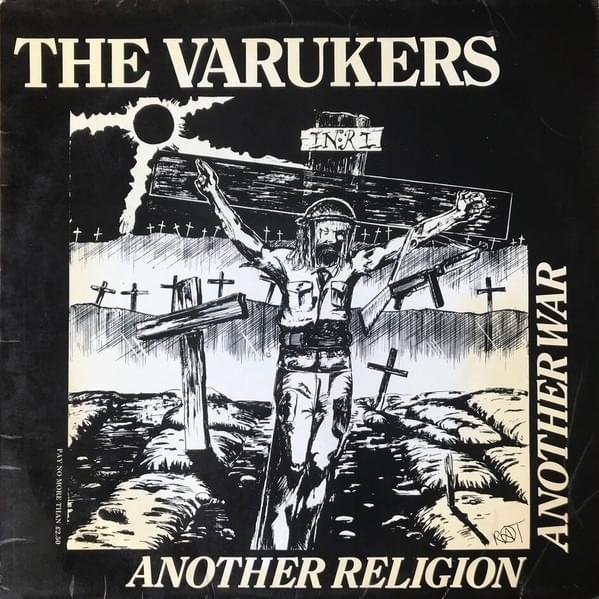
The lyrics paint a stark, almost detached picture of conflict, opening with a blunt, cyclical observation: "Another religion, another war." This sets a tone of weary resignation, immediately grounding the listener in a world where violence seems an inevitable, recurring event tied to faith. The initial lines then pivot to specific, yet unexplained, locations like Lebanon, Israel, and the sky, where the mechanics of war – rolling tanks and screaming jets – are presented as factual, almost mundane occurrences. The narrator expresses a profound lack of understanding, stating "I really don't know why," which amplifies the senselessness of the unfolding destruction.
The core tension lies in the juxtaposition of grand, abstract causes ("religion," "myth") against brutally concrete consequences. The repeated refrain "Another religion, another war" acts as a grim, unchanging constant. This is contrasted sharply with the visceral imagery of "bombing people in their houses" and them "being blown to bits," followed by the chillingly direct "Shoot them in the streets." The lyrics refuse to romanticize or justify, instead focusing on the raw, horrific outcomes for individuals caught in the crossfire.
The most striking aspect of the writing is its unadorned directness and the chilling finality of "Die for a myth." There's no exploration of political nuance or historical context; the narrator simply observes the pattern of religiously motivated conflict and its devastating, indiscriminate impact. The language is spare, almost reportorial, which paradoxically makes the violence feel even more potent and disturbing. It's the sheer, unvarnished presentation of cause and effect – faith leading to destruction – that gives these lyrics their unsettling power.
 View Artist