Song Meaning
This track feels like a raw, unfiltered reflection on a transformative, albeit painful, experience. The narrator acknowledges lessons learned and wounds sustained, ultimately emerging with "thick skin." There's a sense of closure, a "thank you for listening and thank you for everything that happened," signaling the end of a significant, "very strange journey."
The passage of time, marked by "one year, one year and four seasons," highlights a period of intense emotional fluctuation, moving from "hell to Eden" and tasting a forbidden "apple." This suggests a relationship or situation that was both alluring and ultimately led to departure, with the narrator admitting "I'm leaving" and having "other devils to dive into." The desire for the other person's happiness "from afar" underscores a complex mix of lingering affection and necessary distance.
A central theme is the narrator's relentless drive and resilience in the face of conflict. Phrases like "I entered a war" and "I'm coming home now" are repeated, emphasizing a return from battle, but with a crucial caveat: "it's not the same thing." This internal shift is profound, as "every day I learn something, I write and I erase," suggesting a constant process of re-evaluation and shedding old selves. The idea that "what died inside, who knows what brings it back to life" points to a deep, perhaps unrecoverable, internal change.
The lyrics powerfully convey a refusal to surrender, with "surrender" being a word absent from the narrator's "dictionary." The core struggle seems to be an internal one, a "problem" of "diving deep" and "loving lessons," but also a struggle against external forces that "hate the stranger" and "kill everything inside me, a whale." This internal "whale" could represent a powerful, perhaps overwhelming, aspect of the self or a deep-seated pain that the narrator fights to keep alive or understand.
Despite the internal battles, the narrator expresses a profound weariness: "I don't have the strength anymore to keep wading through this night, because I'm human after all and I have limits." This admission of human frailty contrasts with the earlier "warrior" persona. The recurring idea that "the planet will spin, but we will keep moving away" suggests a sense of inevitable drift and disconnection, even as life continues. The final lines, "Nostalgia is a disease, and time does not return," and the assertion of being "above among the stars, I am lit up," signal a detachment from past pain and a present state of elevated self-awareness, culminating in a performance or "show" where the "moon and ocean" are given, perhaps as a final offering or testament.
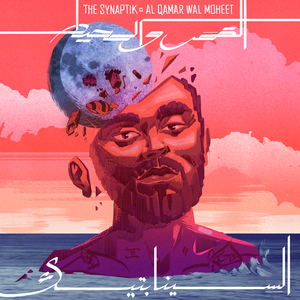
 View Artist