Song Meaning
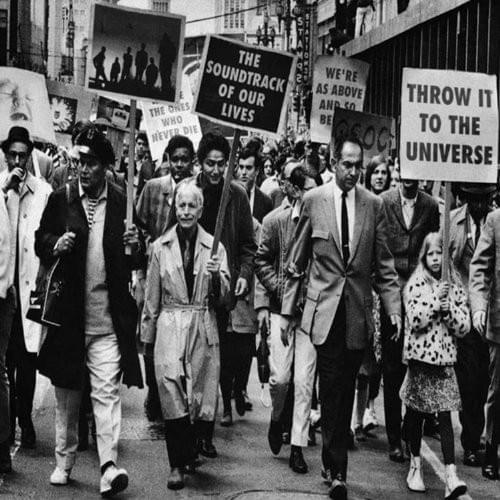
These lyrics paint a picture of an omnipresent, almost divine force that's deeply woven into the fabric of human experience. It’s not just background noise; it’s the very essence of what makes us feel alive and connected. The repeated assertion, "We are the ones who never die," suggests a timeless, enduring quality, a spirit that transcends individual existence and echoes through generations. This force is presented as both familiar, like "songs you learn to sing," and all-encompassing, the "sound of everything."
The core tension lies in the duality of presence and ephemerality, creation and dissolution. The narrator declares, "We say hello to say goodbye," a phrase that encapsulates the cyclical nature of existence. This force is the "space you learn to know," implying a process of discovery and understanding, yet it also exists "as above and so below," indicating a cosmic, all-pervading reach. The idea of being "a certain free then free" hints at a state of liberation that is both defined and boundless, a paradox that fuels the song's ethereal vibe.
The most striking aspect of the writing is its use of abstract concepts as concrete identities. This force isn't just *like* the soundtrack of our lives; it *is* the soundtrack, the "goals in your machine," and "descendants of a dream." This elevates the lyrics beyond simple metaphor, presenting these abstract notions as active participants in our reality. The repetition of key phrases like "We are the ones who never die" and "We are the soundtrack of your life" hammers home the message of this enduring, foundational presence.
Ultimately, the effectiveness of these lyrics stems from their bold, declarative statements about an intangible force. By personifying abstract ideas and cosmic concepts, the song creates a powerful sense of awe and connection. It suggests that the most profound aspects of our existence – our drive, our memories, our very sense of being alive – are part of something larger, something eternal that resonates through everything.
 View Artist