Song Meaning
The lyrics paint a picture of a relationship teetering on the edge, set against a backdrop of decay and desperate escapism. The narrator observes their partner, who seems detached and perhaps fragile, existing in a gilded, yet artificial, state – an "expensive birdcage" and a "plastic baby / In a Fabergé egg." This initial image contrasts sharply with the narrator's memory of "firefights," suggesting past passion or conflict, now juxtaposed with a present encounter at a place called "Café Blasé." The setting itself hints at a jaded or weary atmosphere, mirroring the emotional state of the relationship.
The central tension arises from the narrator's persistent love and desire for connection amidst the partner's apparent withdrawal and the bleak surroundings. The partner is described as being "in your own little head / In a field of sunflowers," a seemingly idyllic image that's immediately undercut by "blood in your mouth" and "rats all over town." This creates a disturbing dissonance, suggesting an internal or external rot beneath a superficial beauty. The narrator's own retreat to a "nameless seaside ghost town" or a "hideous city of unknown words" when experiencing certain stimuli, like the moon or sleep, further emphasizes a sense of isolation and a struggle to find solid ground.
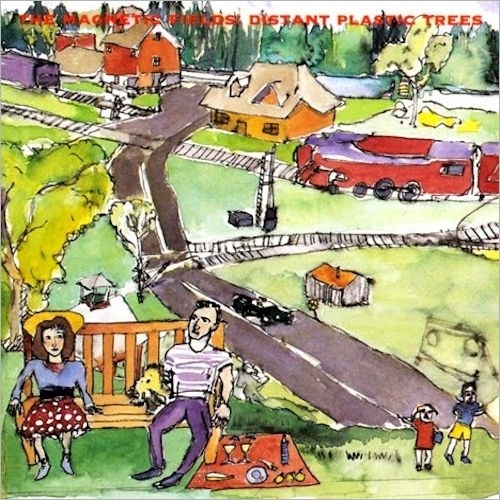
The most striking craft element is the recurring motif of confinement and decay juxtaposed with desperate pleas for escape and intimacy. The partner is trapped in various "little worlds" – a "birdcage," a "box" – while the narrator longs for shared adventures like going "out to the beach" or "under the sea." The chorus offers a radical, almost destructive, fantasy of escape: "derail the trains" and "run away into the cave." This violent imagery, coupled with the repeated, almost frantic, declaration "I still love you, I still love you, baby," highlights the immense effort the narrator is expending to maintain the relationship against overwhelming odds.
Ultimately, these lyrics resonate because they capture the raw, often painful, reality of loving someone who seems lost or broken, while simultaneously feeling the urgent need to hold on. The stark imagery of the "abandoned firehouse" serves as a potent metaphor for their shared existence – a place once vital, now derelict, yet still a home because they are together. The narrator's desperate, almost surreal, plans for escape and their unwavering, if strained, declaration of love are what make this portrayal of a troubled relationship so compelling and emotionally charged.
 View Artist