Song Meaning
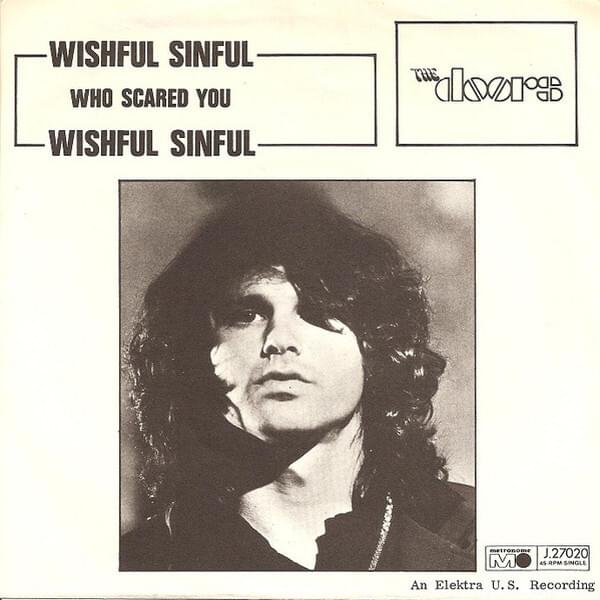
The lyrics paint a picture of a love submerged in a melancholic, almost suffocating atmosphere. The recurring imagery of "water covers everything in blue" and "wicked blue" establishes a dominant tone of sadness and entrapment. This isn't a vibrant, happy love; it's one steeped in a "wishful sinful" longing, suggesting a desire for something beautiful that's perhaps unattainable or tainted.
The central tension lies in the contrast between the perceived beauty of the love and the inescapable despair. The narrator acknowledges, "Our love is beautiful to see," yet immediately follows with a desire to retreat, "Right back where I came." This suggests a love that looks good on the surface but is fundamentally flawed or unable to thrive, leading to a feeling of being stuck. The "sun is shining deep beneath the sea" is a striking image of hidden potential or beauty that remains inaccessible to the couple.
The repeated phrase "Wishful sinful" is the core of the song's emotional complexity. It juxtaposes a hopeful, perhaps naive, desire ("wishful") with a sense of transgression or moral ambiguity ("sinful"). This duality perfectly captures a love that might be desired but is also recognized as problematic or doomed. The "wicked blue" further amplifies this, linking the color of sadness to a more active, malevolent force.
Ultimately, the lyrics resonate because they articulate a specific kind of romantic despair. It's the feeling of being caught in a situation that appears desirable from afar but is internally draining and inescapable. The narrator's final admission, "Love to hear the wind cry / Love to hear you cry," is a chilling acceptance of this sorrow, finding a strange comfort in shared misery.
 View Artist