Song Meaning
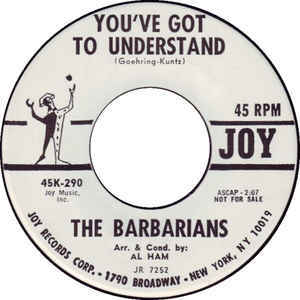
The narrator lays down an ultimatum, framing love as a total, irreversible surrender. The repeated phrase "You've got to understand" isn't a plea for empathy, but a demand for compliance. It establishes a tone of possessiveness right from the jump, warning that falling in love means a complete forfeiture of freedom. This isn't about mutual affection; it's about ownership, with the chilling declaration that "Your heart belongs to me" and "You never will be free."
The central tension hinges on the speaker's intense need for absolute commitment, presented as the ultimate proof of care. They equate deep caring with the demand for "forever, forever," pushing for a decision that brooks no hesitation: "It's now or never." This creates a suffocating pressure, where the act of loving is conflated with an inescapable, lifelong obligation.
The most striking aspect is the circular logic used to justify the demand. The narrator insists that understanding their care is contingent on the other person yielding completely, and that yielding completely will somehow lead to understanding. The phrase "if you understand / I know you'll understand" suggests a self-fulfilling prophecy, where the act of submission is the only proof of comprehension. It’s a masterful, albeit disturbing, manipulation of language to enforce a singular, rigid vision of love.
This lyrical construction is effective because it weaponizes the language of affection into a tool of control. The insistence on "understanding" and "care" masks a profound insecurity and a desire for absolute certainty. The relentless repetition and the stark, binary choice – "now or never" – create a sense of inescapable finality, making the listener feel the weight of the narrator's desperate demand for total devotion.
 View Artist