Song Meaning
The lyrics present a direct address, framing a divine "Jah" as a source of unconditional love that is also reciprocated. The opening lines immediately establish a sense of divine expectation and human failing, suggesting that awareness of past transgressions against "Jah" can be a heavy burden. This sets up a core tension between divine love and the guilt of human action.
The central conflict appears to be the struggle between innate human desires and the perceived divine commandments. The narrator questions why individuals would "hate your brother man" when the divine "Jah" offers a model of reciprocal love. The emphasis on doing "the right and not the wrong" suggests a moral framework where actions are judged against this divine standard, with the ultimate consequence of mortality looming over all.
The repeated phrase "love and be loved in return" acts as a powerful refrain, anchoring the song's message. This isn't just about receiving love, but about a mutual exchange, a principle that the lyrics explicitly state "Jah loves in return." This reciprocity is presented as the ultimate lesson, contrasting sharply with the potential for hate and wrongdoing mentioned earlier. The stark reminder that "you surely gonna die" underscores the urgency of embracing this principle of reciprocal love.
Ultimately, the effectiveness of these lyrics lies in their straightforward, almost sermon-like delivery. They confront the listener with a simple yet profound dichotomy: the potential for destructive human behavior versus the redemptive power of reciprocal divine love. The direct, imperative tone and the clear moral compass offered create a sense of earnest appeal, urging a re-evaluation of one's actions in light of this loving, returning divine presence.
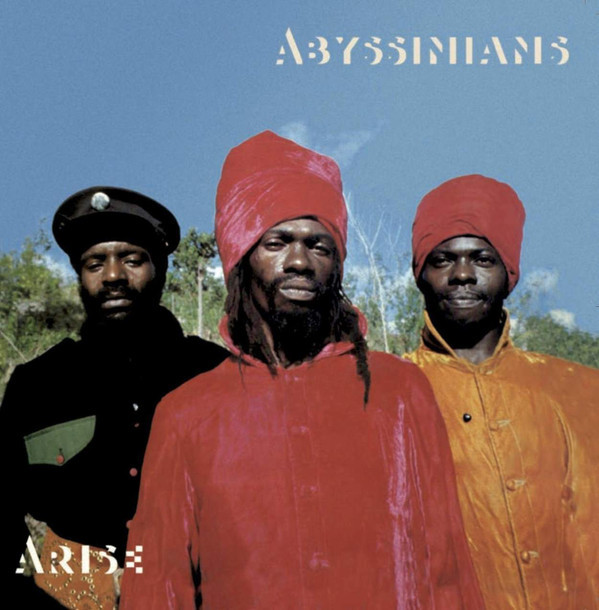
 View Artist