Song Meaning
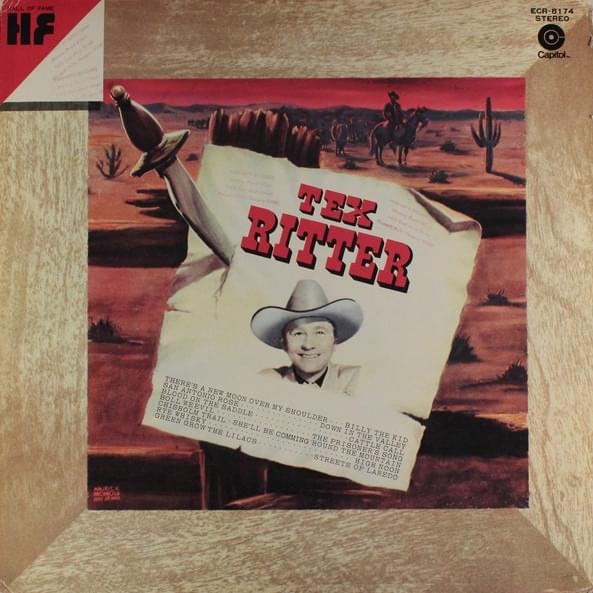
Tex Ritter's "Cattle Call" isn't just a Western tune; it's a sonic portrait of solitude and the quiet contentment found in simple routines. The song's meaning resides not in complex narratives, but in the evocation of a feeling, a mood deeply embedded in the American West. The lyrics paint a picture of a cowboy's life, driven by the rhythms of nature and the responsibilities of his work. The opening verses immediately establish this setting: "When the cattle are prowlin' / And the coyotes are howlin' / Under the western sky." This isn't a romanticized version of cowboy life; it's a depiction of the raw, almost primal connection between man and landscape.
The almost primal yodel of the chorus, "Woo...hoo, hoo hoo hoo hoo," is the song's emotional core. It's a sound that transcends language, communicating a sense of freedom, longing, and the vastness of the open range. It’s an expression of the cowboy's inner state, a primal scream into the void that somehow finds peace in the echo. The verses further develop this theme, highlighting the cowboy's resilience and dedication. Despite the long hours and unpredictable weather, "His heart's light as a feather / He sings to the cattle this call." This isn't blind optimism, but rather a grounded acceptance of life's challenges, finding joy in the simple act of tending to his herd.
The final verse brings the song full circle, emphasizing the cyclical nature of the cowboy's existence. "When the cattle are bedded / And the saddle horse shedded / Nothing seems to be wrong." There's a profound sense of peace in this moment, a feeling of completion that comes from fulfilling one's duty. The cowboy's gaze towards the stars is not one of existential angst, but rather a quiet acknowledgement of his place in the universe. "Cattle Call" is ultimately a meditation on the beauty of simplicity, the solace of solitude, and the enduring spirit of the American West. It presents a vision of masculine stoicism intertwined with a deep appreciation for the natural world, offering a comforting, if somewhat idealized, image of a life lived in harmony with nature.
 View Artist