Song Meaning
The lyrics paint a picture of someone being judged for their unconventional appearance and behavior, yet asserting their success and defiance. The narrator points out the accuser's expectations – a white shirt, shiny shoes, and proper etiquette – which they clearly don't meet. Despite this, they claim to be leading the accuser, suggesting an underlying power dynamic that defies the superficial judgment.
The core tension lies between societal expectations of conformity and the narrator's proud embrace of their own path. The repeated "Pakko olla ylpee" (Have to be proud) and "Pakko olla röyhkee" (Have to be rude/brazen) highlight a forced, almost necessary, attitude of defiance. This isn't just a choice; it's presented as a survival mechanism in a world that penalizes deviation.
The craft here is in the sharp, almost confrontational imagery and the contrast between the accuser's perceived "niceness" and the narrator's self-proclaimed "törkee kusipää" (fucking asshole) persona. The line "Ei kivat pojat soita rokkia" (Nice boys don't play rock) directly links their rebellious stance to a specific cultural archetype, framing their rudeness as a badge of authenticity within a certain subculture.
This defiance is effective because it taps into a feeling of being misunderstood or unfairly judged. The lyrics suggest that to succeed or even just to exist on their own terms, the narrator feels compelled to adopt a tough exterior. The final lines, with the accidental cappuccino mishap and the "Mr. Jees-Mies" address, underscore the narrator's disdain for the judgmental, polite world they are pushing against.
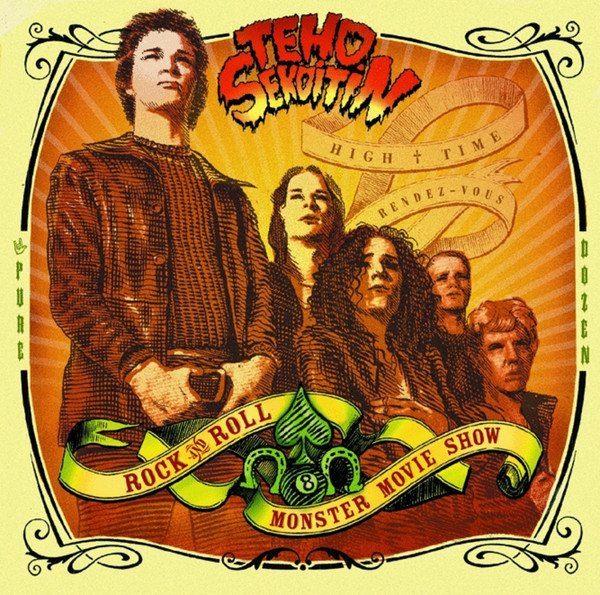
 View Artist