Song Meaning
The lyrics paint a poignant picture of a world where the innocence and dreams of children are contrasted with a looming sense of an ending. The narrator pleads for a 'sun' – a metaphor for hope, warmth, and a brighter future – to be given to the 'children of the earth.' This plea is urgent, questioning the state of the children's world when 'the good life ends.' The imagery of drawing a plow and harrow over the earth, 'turn after turn,' suggests a desire to till and prepare the ground for something new, perhaps to erase past hardships or to cultivate a better future.
The verses expand on this yearning for a nurturing environment for children. The narrator imagines a world within their 'small rooms,' where the 'universe fits in a fourteen-inch cube' – highlighting how children can find wonder in limited spaces. They wish for a meadow with bluebells and a forest of birch and hawthorn, creating idyllic natural settings. The poignant request to 'hang a sun on childhood's wall' further emphasizes the desire to imbue their immediate surroundings with light and optimism, even if the broader world seems uncertain.
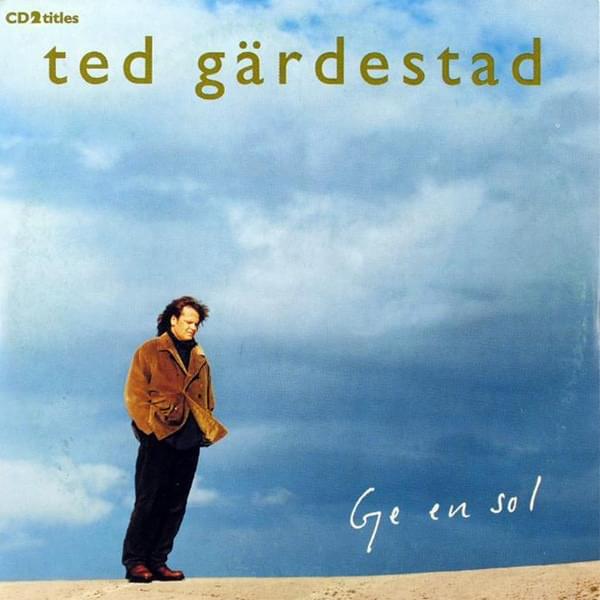
The bridge introduces a beautiful paradox: a 'snow-white memory' of the 'brightest time' and a sea that 'roars and crashes' but 'without fighting.' This suggests a longing for pure, untroubled recollections and a powerful, natural force that is not destructive. It’s a wish for peace and enduring beauty, a stark contrast to the potential end of 'the good life' mentioned in the chorus. The repetition of 'Ge en sol' (Give a sun) throughout the song acts as a powerful refrain, a desperate, hopeful mantra for a world that desperately needs light and kindness for its youngest inhabitants.
 View Artist