Song Meaning
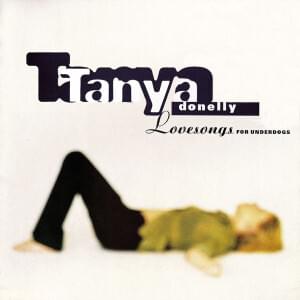
{"song_id": 14013995, "meaning": "Tanya Donelly's \"These Days\" isn't just a song; it’s a study in devotion teetering on the edge of self-destruction. The lyrics, though sparse, paint a vivid picture of someone grappling with the intensity of another's love or perhaps obsession. The opening lines, \"You say you alone can love me / Give me the reason you do,\" immediately establish a power dynamic, a plea for justification in the face of overwhelming affection. The repeated questioning hints at a deep-seated insecurity, a need to understand the 'why' behind such intense devotion. This sets the stage for the song’s central theme: the weight of expectation and the lengths one will go to for validation or reciprocation. The almost desperate promise, \"I'll ride a camel to you,\" illustrates a willingness to endure hardship, to cross any boundary, for the sake of this connection, however unbalanced it may be.
The recurring motif of \"Heaven is / Heavy these days\" speaks to a spiritual burden, an atmosphere thick with unspoken anxieties and the unwelcome presence of \"uninvited saints\" and later, \"cross-fingered saints.\" These figures suggest a sense of judgment, a feeling of being scrutinized under a moral lens. The image of bats flying to a ribcage evokes vulnerability and decay, as if the speaker's innermost self is being exposed and consumed. The repeated phrase, \"My bad form ended strange,\" is particularly haunting. It implies a past transgression, a mistake that continues to reverberate and shape the present. It's a recognition of flawed actions and their unforeseen consequences, a lingering shadow that colors the entire relationship.
Ultimately, the song meaning of \"These Days\" resides in its portrayal of a love that feels both suffocating and necessary. The willingness to \"walk on razors\" underscores a masochistic element, a willingness to endure pain for the sake of connection. Yet, there's also a glimmer of hope in the line, \"If you see the true face of my jailor / And you save her too.\" This suggests a desire not only for personal salvation but also for the liberation of those who hold her captive, whether literally or metaphorically. It speaks to a profound empathy, a refusal to perpetuate the cycle of pain and control. Tanya Donelly masterfully captures this complex interplay of devotion, self-doubt, and the search for redemption within the confines of a relationship that feels both blessed and cursed."}
 View Artist